Greetings and Salutations to my long-lost readers! Or...am I the long-lost blogger?
In any case, thanks for hanging in there, welcome to new followers, and let me just say I hope to resurrect this ol' gal.
So here we are in the midst (well still the semi-beginning) of the Lenten season, and we've all been hit with the shocker of our beloved Holy Father's impending departure from the Papacy. It truly gives us all something to pray about and for as the conclave nears once again, and offer our Lenten sacrifices for the guidance of the Holy Spirit for the good of the Church.
I don't know about you, but right on schedule, God chose a sacrifice for me since I'm still awful with sticking to my own chosen sacrifices. That's right: I got the flu. Which always happens when I receive the St. Blaise blessing.
This time, though, I think I've avoided bronchitis but it's not over yet so who knows what joyful sacrifice God still has in mind for me to make this year? I've been sick all week, went to work yesterday and had to leave - just couldn't make it for very long. Came home to nap, brought work home with me, and this morning we're dealing with a snowstorm. It's not horrible but you all know how it is: when you feel awful or just plain exhausted from being sick, the last thing you want to do is head out onto bad roads. I emailed my boss to ask if I could work from home today, and go in tomorrow.
My fear is that she may say I HAVE to go to the Dr. and get a note since I've been out most of the week. However because I went in yesterday and am sorta flip-flopping days off, I might be able to avoid that requirement. Thank you God for a flexible work schedule since I can't afford to go to the Dr. who will only tell me to do what I've been doing: chicken broth, garlic, lots of fluids like tea, orange juice, water, sleep, lay low, OTC meds, and laying low. We all know how it goes. So...pray for me y'all and I'll offer this particular suffering for you. (I should add that's a guarantee on my part, whether you pray for me or not!)
Today, because I'm home, am having a mini-retreat and may actually post some of my work, depending on how it progresses. Be well, my friends, be prayerful, and be holy as your Father in Heaven is Holy.
Blessed Lent to you all!
Showing posts with label Lent. Show all posts
Showing posts with label Lent. Show all posts
Friday, February 22, 2013
Monday, April 25, 2011
Success To the Work of Your Hands
He is Risen! He is Risen INDEED!

Lent was difficult this year, and the Triduum was no exception, and although I had difficulty in prayer and was, for the first time in recent memory, tempted to NOT attend the Triduum liturgies, I went and worshiped as planned. Non-Catholic friends of mine sometimes question why we Catholics are so "ritualistic", and my answer is this: because our rituals do not let us fall into the dictatorship of emotions, but rather help us to honor God because He wills it, even though we may will the opposite.
I am grateful, therefore, for our Triduum "rituals", for they help to sanctify we weak souls who would prefer to flee and "do our own thing".
One of the blessed things about the Triduum, however, was time off from work and because I plan my life to avoid "errands" and other things, I was able to spend some time working on my Icon of Our Lady of Perpetual Help. During Lent I went on retreat and my wonderful teacher and friend, a dear, faithful Religious Sister looked at it with her discerning eye and explained to me some new techniques required by this particular Icon. So it was that during the Triduum, even though I had difficulty with mental prayer, God drew me into the Icon. Even though I am still a student and therefore still focus on technique, it was very prayerful for I was able to speak to our Blessed Mother, to Jesus, and to the Archangels Michael and Raphael.
They responded by guiding my clumsy hand that held the brush, and I was amazed at the effects. Although I continue to make mistakes and see them long after the paint has dried, more and more I am gaining confidence, wondering if, perhaps, one day, I will truly be able to call myself an Iconographer.

The Homily on Holy Thursday was given by a priest ordained only a year ago, and he revealed to us the Bible verse engraved upon his chalice, from Psalm 90, "..Give success to the work of our hands."
His homily struck a chord with me, for ever since, when I approach the Icon I have been praying those holy words. The Icon I write now is ultimately not for me. For whom do I write it, but for God? I write it to give Glory to Him, to ponder on His Incarnation, to meditate upon the Mystery of the Redemption. It is the most Sacred of arts, yet I do not know where it will end up. So it is that I pray it as I go, begging for intercession, praying for success to this work of my unworthy hands.
Who am I to open a window to Heaven? Who will gaze through this window? Who am I to co-create it with God?
Success. What is "Success"?
In God's eyes, I do not know the definition of "Success". When I was in high school and college, and in my young adult years, at the "threshold of the universe", I thought "success" was primarily defined by financial means, and the elevation of status within one's chosen field. These days, I see things differently and I have learned the hard way that "success" according to God may not be anything I envision in my fallen perception.
We have all come through Lent with varying levels of earthly "success". What does that mean?
Many of us think we have 'failed", but have we really? If our failures have brought us to the Throne of Mercy, they are not failures but successes in self-knowledge, a huge gift of Grace. If our "failures" have revealed to us something that keeps us from God, then we must recognize a gift given from God's heart to our own.
If our Lenten "failures" have reminded us that of ourselves, we can do nothing, and therefore we have NEED of a Savior...then we have not "failed" so much as been brought closer to Jesus through a breakdown of our Pride.
When we pray, therefore, for "Success", we have to recall that the ways in which we define that word may differ drastically from God's own definition.
As of now, as I pray for success for the work of my hands, specifically for my Icon, I don't know, exactly, what that means. In practice I am praying for my hand to be guided, for my intellect to be informed, for my will to be strengthened, for my Pride to be overcome; for I will and I MUST make mistakes and accept those as I go. It is the mistakes that teach us the most.
It is the mistakes we make, whether in Iconography or in other areas of life, that lead us to ask the most heartfelt and sincere questions.
Difficult Lent - Difficult Easter?
It doesn't matter if our Lent was a big Ol' "FAIL". It doesn't matter. It is behind us now. For those of us who got out of Lent with nothing but this lousy FAIL t-shirt, it is time to let it go and rejoice, not in ourselves, but in Our Lord who foresaw our big fat FAILS long before He was crucified for them.
It is time to celebrate, and if we have failed, then we have a great gift; that of being able to celebrate, purely, the Resurrection, for we can recognize it has nothing to do with our own merit, but Our Lord's. It is a great gift, and we should recognize it as such, for this gift is meant for our own humility. It is my untried theory that we who have difficulty in Lent both need to grow in holiness and need to grow, most specifically, in humility.
And yes, that hurts, and it hurts even more to admit it in public. But then again, for those who know us...is it any surprise that we need that lesson?
Is there, truly, anyone who WOULDN'T benefit from an increase in humility?
 We have to remember that none are perfect, we are still being created, and like an Icon, are incomplete until we are with God for eternity. An Icon is not truly an Icon until it is Blessed in a special way, and that is what makes it worthy of veneration. So it is with the Saints - and we are ALL called to be Saints, should we choose to cooperate with that Divine Invitation.
Therefore, let us all pray together, with and for each other, to rejoice in the Resurrection of Christ, and for the blessing of success to the work of our hands...all for Him and for His Kingdom, unto Eternity with all the Blessed.
A Holy Easter to you all, and may God grant you all success to the work of your hands. Amen!
Friday, April 15, 2011
The Smallest Voice
 During Lent, we are supposed to draw closer to Jesus, but that's difficult in a world such as ours, isn't it? Many of us grew up watching cartoons that portrayed the conscience every now and then. They were typically a cute little red devil on one shoulder whispering sweet nothings of encouragement to do the wrong thing juxtaposed against a very un-fun white angel giving solid direction to do what was right and good.
In our world, we're surrounded by many voices and temptations. We're surrounded by nearly pornographic images in magazines, on buses, on TV, and merely turn on a radio stations to hear the latest gossip of a sexual nature ranging from anything from the guy next door to the DJ's to celebrities or whatever Jane or Joe has grabbed the headline due to some obnoxious and depraved immoral act.
We are surrounded by voices that denounce our faith by holding up examples of those who didn't meet it so well, or at least are accused of not having done so.
We are surrounded by people who hate the Church, hate Christianity and are more interested in mindlessly spreading lies about the Church, tempting us to give into those lies rather than seeking the truth for ourselves through legitimate historical documentation the Hitlery Channel and A&E refuse to consider for fear it would completely wreck their ratings.
These voices tend to become the most shrill during Lent, and even as we try to seek the silence and prayer, we are called into outright battle, either from our knees or in verbal defense of our Faith. And if we refuse to fight, we are at risk of being assimilated into the destruction of the cacophony of annihilation.
That's what happens to the fallen away Catholics and other Christians; they give in to "The Nothing" in the Swamps of Despair that make up our secular world.
STOP! What voice are you listening to?
Tonight I was reminded of a training incident in which my life was literally hanging by my fingertip.
 In that incident, I can still remember the loudest voices demanding that I do the wrong thing - the thing I KNEW was wrong, and even though I wanted to give in to those terrible demands, and was sorely tempted to do so, there was a stronger instinct to just hang on. To pray. To wait for help, even as I felt the rope slipping away.
 And there he was, the Captain who refused to be shrill, refused to be loud and was only as loud as necessary so that I could hear him. So it was that his instructions cut through the noise, for rather than calling for me to give up, he saw in me a survival instinct he chose, as a good teacher, to build up. He didn't want to see me let go and fall, but rather, to learn from the struggle.
It was to his voice I responded, for his reason cut through my panic, his brief instruction cut through my defiance, step by step until I could follow him.
It was the smallest voice that was the most powerful, and the voice that may have quite literally saved my life.
So it is with Jesus.
This Lent of 2011, we have seen the wind, and the earthquake, and the flood, and the fire, (1 Kings 19) but the Lord has not been in those things; only the cacophony of the popular media. The Lord has been present to those who suffer, but it was not He in those things in and of themselves. Those events were mere distractions.
The Lord is in the voice we refuse to hear, the interior voice that gives direction, cutting through the noise and exterior disasters.
The Lord is in the smallest voice, the whisper in the wheat the underscores the tornado's gale. It is in the crumble of shale and limestone in the fury of the earthquake, and it is is the silent falling of ash in the tumultuous explosion of the volcano. His voice is in the mysterious footprints in the soot left after the wildfire, and in the most insignificant debris left after the floods. His voice is in the animals fleeing before what is coming, but never leaves anyone behind.
No matter what the source of the Roar, the Lord can be found speaking quietly in a register the gales can't touch, for it flies beneath the radar to pierce us through hidden and deeply personal means.
I spoke of that day at the Tower, that terrible day, and even now, I am coming to understand the lesson ever more deeply. Truly, I won't ever forget the Captain's voice cutting through my panic, working with me instead of against me, asking me to work with him in following his direction. He saw my faith and called me to reason, knowing that was the bridge between equal failures.
So it is that we struggle in the same way during Lent. We try, we fail, and every day we are faced with the assault upon our senses and intentions. Every day we are called especially to seek Our Lord, and the sad thing is this: we relegate this struggle only to Lent and, in a lesser way, to Advent.
Although this struggle takes place every day of our lives, we only give it attention during penitential seasons, and we try to play it down to make it more comfortable. The reality is this: the path to holiness is not comfortable.
We are willing to sacrifice much to lose weight or get in shape or become healthy or get a better job. But to become holy - we give it two brief seasons encompassing 10 weeks out of 52 in an entire year, then totally disregard the rest as though our lives and souls are meaningless.

It's no wonder we complain we can't hear the voice of God; we don't listen long enough to take His voice to heart.
Tuesday, April 05, 2011
Finding Happiness in the Cross
It is HARD to be holy, and working on the habits that increase virtues is sometimes a very harsh labor – yet it’s one lightened by love. The penances and chosen deprivations of Lent help us to take stock of our spiritual lives, our sinful habits, our willful disorder, and in so doing, help us to know ourselves more clearly in the face of God. Yes, it’s difficult, but it is the difficulty that bears fruit, for we must all pass through the Cross in order to have eternal life. During Lent, more than any other time of the year, we know the weight of the shadow that falls over us and we walk with Christ towards Calvary, joining our own bloody footprints to His.
It is easy to become frustrated with the world in which we live; the world that hates Our Lord and anyone who sincerely seeks to follow Him. It is easy to become angry with those who claim to be Christian and then legislate things completely contrary to Christianity. It is easy to give in to despair when we look around at the multiple disasters, both natural and man-made, that plague our globalized society, and it is easy to let slip vitriolic condemnations.
We are fallen creatures and even when we’re trying to grow in holiness, we fail miserably. Constantly. Because of this, it’s easy to want to give up.
Some mornings I don’t even want to get out of bed for it seems that I awake only to the anticipations of the sufferings of that day. Then I gaze upon the Crucifix and ponder…if things are so bad now, how much worse would they be if Jesus had not come? How much worse off would we be if Jesus had not sanctified the world with His Incarnation and restored our relationship with the Father through His Passion, Death, and Resurrection?
It is the Cross that gives us Hope, that beckons us onward, calling us to Faith, demanding that we follow this life-giving paradox of sacrificial Charity.
Today I went into the chapel to pray. As always, I was flooded with a sense of relief. When I arrive, Jesus already knows what I’ve done and what I haven’t done. He knows the state of my soul perfectly, and still, He allows me into His Holy presence. When I kneel and enter into conversation with Him, nothing else is important. Entering the church, entering the chapel is entering Eternity; a place where time does not exist, where the problems of the world melt away, and I can collapse at the feet of my beloved Savior.

It is easy to become frustrated with the world in which we live; the world that hates Our Lord and anyone who sincerely seeks to follow Him. It is easy to become angry with those who claim to be Christian and then legislate things completely contrary to Christianity. It is easy to give in to despair when we look around at the multiple disasters, both natural and man-made, that plague our globalized society, and it is easy to let slip vitriolic condemnations.
We are fallen creatures and even when we’re trying to grow in holiness, we fail miserably. Constantly. Because of this, it’s easy to want to give up.
Some mornings I don’t even want to get out of bed for it seems that I awake only to the anticipations of the sufferings of that day. Then I gaze upon the Crucifix and ponder…if things are so bad now, how much worse would they be if Jesus had not come? How much worse off would we be if Jesus had not sanctified the world with His Incarnation and restored our relationship with the Father through His Passion, Death, and Resurrection?
It is the Cross that gives us Hope, that beckons us onward, calling us to Faith, demanding that we follow this life-giving paradox of sacrificial Charity.
Today I went into the chapel to pray. As always, I was flooded with a sense of relief. When I arrive, Jesus already knows what I’ve done and what I haven’t done. He knows the state of my soul perfectly, and still, He allows me into His Holy presence. When I kneel and enter into conversation with Him, nothing else is important. Entering the church, entering the chapel is entering Eternity; a place where time does not exist, where the problems of the world melt away, and I can collapse at the feet of my beloved Savior.
He is the one who makes life worth living. It is for Him I arise each morning, and for Him I work each day. It is Jesus I seek when I have no happiness, for real happiness can only be found in Him. It is Jesus who gives me the strength to go on, and continues to pull me forward and upward when I’m ready to give up. Through this long winter, this long season of Lent, through this desert of spiritual aridity punctuated by the thorns of sin, I continue forward because I know, ultimately, how this will end. I may not be very holy now, and I may fall constantly, but as long as Our Lord is there, I will always have a reason to get up again and continue pressing on.

Thank you, Jesus for our crosses. Every single one. And especially yours.
Tuesday, March 22, 2011
Iconography and the Spiritual Life
Outside the wind is blustering, a cold rain is falling and promises to turn into a sloppy mess long before we see the light of day again. But inside, I am blessed to be warm and relatively comfortable as I brush layer after layer of paint on an icon I recently began.
My intent this Lent was to spend more time reading and working on my icons, both things I truly love. Yet this evening at Adoration and through Mass, I could barely focus. I was hungry (although I had not fasted today), I had a lot on my mind, many worries, doubts and in a sense, on the edge of panic. At one point I was near tears, yet thankful I could bring all of that to prayer.
I wondered, though, if I'd be able to focus after dinner, or if my intent to work on my icon would not come to fruition.
Finally, though, I sat down and put my hand to the brush and touched paint to the icon, knowing I must keep this promise, even if only for a short time; it is a promise I made to myself, and more importantly, to God. You see, time spent writing icons is time passed in prayer.
As one should do when reading about the Saints, or trying to understand their writings, so should one do when working on their image in an icon: converse with them. Pray to them, ask the Holy Spirit for insights into their holiness, into God's grace, and understanding His will. Perhaps there's a reason that *this* particular icon is the one chosen: what is the significance of that? What is one supposed to learn from that Saint or depiction of the Mother of God or scene from scripture?
Even in silence where the prayer doesn't flow in words, there is a divine intimacy, the sense of co-creating with God and the understanding that it is a great and humbling gift to be allowed to enter into such a task.
For lent, though, it seems that this discipline is quite proper, for to write an icon parallels the spiritual life. It is supposed to be done perfectly, and yet, because we are fallen creatures we make mistakes, time and time again. I might go over a line and have to swipe away the extra paint, or perhaps I lean into a fresh spot, destroying it. The mistakes can't be erased, exactly; they remain, there, even if covered by layers upon layers of paint, those flaws become a part of the icon.
The only thing one can do is to try to learn from those mistakes, try to correct them as well as possible, and move on, resolving to not make the same mistake again.
We all know how that goes, though, don't we?
Every so often I pick up the icon I wrote last summer, and I see almost nothing but mistakes. So it is as I continue to work on new icons: mistake after mistake. Others may see something different, but I see smudges and ridges and an inability to stay in the lines.
Ah...such is my spiritual life.
I can already see that some of the mistakes I have made have been out of impatience; trying to race ahead to my own little "goal" for this sitting, even though the paint had not yet dried. That tends to be how I make mistakes in real life, too, and where I falter instead of advancing in holiness.
Lent is perfect for recognizing that kind of habitual fault, for now is the time to step back and decide that it doesn't have to be that way. I can grow in the virtue of patience. Just as I work to increase my skill in painting, so I can, at the same time, grow in practicing the virtues. Perhaps, in the end, there will be fewer mistakes.
When one begins an icon, there is a blank slate. Iconographers through the centuries have understood that connection between personal virtue and the end result. When they are complete one icon, having been through a spiritual process all along, they can put that one aside and, realizing they are not yet perfected, pick up another and begin again.

My intent this Lent was to spend more time reading and working on my icons, both things I truly love. Yet this evening at Adoration and through Mass, I could barely focus. I was hungry (although I had not fasted today), I had a lot on my mind, many worries, doubts and in a sense, on the edge of panic. At one point I was near tears, yet thankful I could bring all of that to prayer.
I wondered, though, if I'd be able to focus after dinner, or if my intent to work on my icon would not come to fruition.
Finally, though, I sat down and put my hand to the brush and touched paint to the icon, knowing I must keep this promise, even if only for a short time; it is a promise I made to myself, and more importantly, to God. You see, time spent writing icons is time passed in prayer.
Iconography can be very intimate, like spending time with a dear friend.
As one should do when reading about the Saints, or trying to understand their writings, so should one do when working on their image in an icon: converse with them. Pray to them, ask the Holy Spirit for insights into their holiness, into God's grace, and understanding His will. Perhaps there's a reason that *this* particular icon is the one chosen: what is the significance of that? What is one supposed to learn from that Saint or depiction of the Mother of God or scene from scripture?
Even in silence where the prayer doesn't flow in words, there is a divine intimacy, the sense of co-creating with God and the understanding that it is a great and humbling gift to be allowed to enter into such a task.
For lent, though, it seems that this discipline is quite proper, for to write an icon parallels the spiritual life. It is supposed to be done perfectly, and yet, because we are fallen creatures we make mistakes, time and time again. I might go over a line and have to swipe away the extra paint, or perhaps I lean into a fresh spot, destroying it. The mistakes can't be erased, exactly; they remain, there, even if covered by layers upon layers of paint, those flaws become a part of the icon.
The only thing one can do is to try to learn from those mistakes, try to correct them as well as possible, and move on, resolving to not make the same mistake again.
We all know how that goes, though, don't we?
Every so often I pick up the icon I wrote last summer, and I see almost nothing but mistakes. So it is as I continue to work on new icons: mistake after mistake. Others may see something different, but I see smudges and ridges and an inability to stay in the lines.
Ah...such is my spiritual life.
The fact is, iconography, especially perfecting the sacred art, is no easier and no more difficult than growing in holiness; one reflects the other.
I can already see that some of the mistakes I have made have been out of impatience; trying to race ahead to my own little "goal" for this sitting, even though the paint had not yet dried. That tends to be how I make mistakes in real life, too, and where I falter instead of advancing in holiness.
Lent is perfect for recognizing that kind of habitual fault, for now is the time to step back and decide that it doesn't have to be that way. I can grow in the virtue of patience. Just as I work to increase my skill in painting, so I can, at the same time, grow in practicing the virtues. Perhaps, in the end, there will be fewer mistakes.
When one begins an icon, there is a blank slate. Iconographers through the centuries have understood that connection between personal virtue and the end result. When they are complete one icon, having been through a spiritual process all along, they can put that one aside and, realizing they are not yet perfected, pick up another and begin again.

Thursday, March 17, 2011
To Amend My Life, Amen!
Have you ever pondered the wording of the Act of Contrition, we pray in Confession, “I firmly resolve, with the help of your grace, to confess my sins, do penance, and amend my life. Amen.”
I have, time and time again, especially if I’ve just confessed the same laundry list of sins for the 100th time. I’ve even confessed THIS problem to the priest with a fiery statement, “I am NEVER going to commit that sin again! I do not want to have to confess it again!”
Of course, at the time, I meant it with all my soul (or so I hoped), and I further hoped that by stating it within the context of the Sacrament, it would be all the more true, and take on more weight in my own memory and intention to “amend my life. Amen!"
I recall, though, that when I stated those vehement words, the gentle rebuke of the priest who expressed hope that certainly I could do better in the future, to take care not to lose hope should I fall again…and again…and again. He reminded me that’s why we had the Sacrament of Confession; because we are weak and in need of God’s grace.
Recently, as part of my Lenten practices, I have been trying to spend more time in Lectio Divina and I am focusing, of course, on Our Lord’s Passion. Although I started with Luke 22:39 (Jesus’ Agony in the garden), in comparing that account with that of the other gospels, I also found myself meditating on the event previous to His Agony: Peter’s vehement, passionate declaration that even though others would fall away, he never would.
Matthew 26:31-35:
Read the passage again, paying attention to the bold: Peter, in his zeal, in his deep love for Jesus, in his heart converted and dedicated to the Son of God, spoke truthfully when he claimed he would never fall away. The idea was absolutely repulsive to him, and clearly, his intent was absolute loyalty. Absolute faith. Absolute trust.
Jesus knew better, though, didn't He? He knew what Peter would do, and in revealing that Peter would deny him, Jesus was not chastizing, but spoke gently and with great love. He knew that this, too must be.
We know that Jesus' prediction came to pass, for indeed, Peter denied Jesus three times, stating that he did not know Him.
Luke 22:60-63 :
It had to happen this way; Peter had to learn the depth of his weakness.
So must we all.
When we go to Confession, or even in private prayer swear we will never committ a certain sin again, or if we are on fire for our Faith, vow that we will "never fall away, even if others do", we are forgetting who we are. Indeed, such zeal is laudable and even necessary, for we should all be so fired up with love for God!
Yet, as Jesus knows, fall we will, not once, not even just three times, but many.
I love the passage from Luke. Peter hears the cock crow just as he's stated his third, most adamant denial of Christ, and this sound brings him back to Himself. He looks up to see Jesus gazing at him, and recalls the words of Our Savior, and realizes...Jesus knew. And He still went to the Cross...for him.
Jesus didn't have to say anything; Peter was able to recognize the depths of his own weakness and in his grief, "he went out and wept bitterly."
We promise Him we will stand by Him, but eventually, we all fall and must get back up.
The other lesson I like to take from Peter's denials is this: if Peter had not been following Jesus so closely, and trying to hard to live up to the promise he had made, to not fall away like the others, he would not have been in a position to deny Jesus.
In other words, Peter entered the battle. He braved the darkness, the hostility of the crowds, risking recognition even as he faltered. Yes, he fell, but had he not fallen, he would not have been able to recognize the depth of his own need, and he therefore would not have been so quick to respond when he sighted Jesus on the shore after His Resurection.
He knew Christ because he risked everything to follow Him, including failure! In fact, it was in his very darkest failure that he found such a deep encounter with Divine Mercy, culminating for Peter personally in his three confessions of love upon the the shore.
Each time we go to Confession, we should remember that we are entering into Love, and in so doing, by admitting our own faults, our sins, our moral failures, we are at the same time confessing a far greater love for God than for our sins.

I have, time and time again, especially if I’ve just confessed the same laundry list of sins for the 100th time. I’ve even confessed THIS problem to the priest with a fiery statement, “I am NEVER going to commit that sin again! I do not want to have to confess it again!”
Of course, at the time, I meant it with all my soul (or so I hoped), and I further hoped that by stating it within the context of the Sacrament, it would be all the more true, and take on more weight in my own memory and intention to “amend my life. Amen!"
I recall, though, that when I stated those vehement words, the gentle rebuke of the priest who expressed hope that certainly I could do better in the future, to take care not to lose hope should I fall again…and again…and again. He reminded me that’s why we had the Sacrament of Confession; because we are weak and in need of God’s grace.
Recently, as part of my Lenten practices, I have been trying to spend more time in Lectio Divina and I am focusing, of course, on Our Lord’s Passion. Although I started with Luke 22:39 (Jesus’ Agony in the garden), in comparing that account with that of the other gospels, I also found myself meditating on the event previous to His Agony: Peter’s vehement, passionate declaration that even though others would fall away, he never would.
Matthew 26:31-35:
Then Jesus said to them, "You will all fall away because of me this night for it is written: I will strike the shepherd....
“Then Jesus said to them, “You will all fall away because of me this night, for it is written, ‘I will strike the shepherd and the sheep of the flock will be scattered. But after I am raised up I will go before you to Galilee. Peter declared to him, “Though they all fall away because of you, I will never fall away. Jesus said to him, “Truly, truly, I say to you this very night, before the cock crows, you will deny me three times.” Peter said to him, “Even if I must die with you I will not deny you.” And so said all the disciples.
Read the passage again, paying attention to the bold: Peter, in his zeal, in his deep love for Jesus, in his heart converted and dedicated to the Son of God, spoke truthfully when he claimed he would never fall away. The idea was absolutely repulsive to him, and clearly, his intent was absolute loyalty. Absolute faith. Absolute trust.
Jesus knew better, though, didn't He? He knew what Peter would do, and in revealing that Peter would deny him, Jesus was not chastizing, but spoke gently and with great love. He knew that this, too must be.
We know that Jesus' prediction came to pass, for indeed, Peter denied Jesus three times, stating that he did not know Him.
Luke 22:60-63 :
But Peter said, Man, I do not know what you are saying. And immediately while he was still speaking, a cock crowed. And the Lord turned and looked at Peter, and Peter remembered the word of the Lord, how he had said to him, “Before the cock crows today you will deny me three times.” And he went out and wept bitterly.
It had to happen this way; Peter had to learn the depth of his weakness.
So must we all.
When we go to Confession, or even in private prayer swear we will never committ a certain sin again, or if we are on fire for our Faith, vow that we will "never fall away, even if others do", we are forgetting who we are. Indeed, such zeal is laudable and even necessary, for we should all be so fired up with love for God!
Yet, as Jesus knows, fall we will, not once, not even just three times, but many.
I love the passage from Luke. Peter hears the cock crow just as he's stated his third, most adamant denial of Christ, and this sound brings him back to Himself. He looks up to see Jesus gazing at him, and recalls the words of Our Savior, and realizes...Jesus knew. And He still went to the Cross...for him.
Jesus didn't have to say anything; Peter was able to recognize the depths of his own weakness and in his grief, "he went out and wept bitterly."
Have we not done the same thing ourselves, in recognition of our weakness? In recognition that without His grace, we cannot overcome our sins?
We promise Him we will stand by Him, but eventually, we all fall and must get back up.
The other lesson I like to take from Peter's denials is this: if Peter had not been following Jesus so closely, and trying to hard to live up to the promise he had made, to not fall away like the others, he would not have been in a position to deny Jesus.
In other words, Peter entered the battle. He braved the darkness, the hostility of the crowds, risking recognition even as he faltered. Yes, he fell, but had he not fallen, he would not have been able to recognize the depth of his own need, and he therefore would not have been so quick to respond when he sighted Jesus on the shore after His Resurection.
He knew Christ because he risked everything to follow Him, including failure! In fact, it was in his very darkest failure that he found such a deep encounter with Divine Mercy, culminating for Peter personally in his three confessions of love upon the the shore.
Each time we go to Confession, we should remember that we are entering into Love, and in so doing, by admitting our own faults, our sins, our moral failures, we are at the same time confessing a far greater love for God than for our sins.

St. Peter...pray for us!
Wednesday, March 16, 2011
Accepting the Cross
"Now is the judgment of this world, now shall the ruler of this world be cast out; and I, When I am lifted up from the earth, will draw all men to myself."
~ Jesus, Jn 12:31-32

Lenten Lesson 2:
"In his self-offering on the Cross, Jesus, as it were, brings all the sin of the world deep within the love of God and wipes it away. Accepting the Cross, entering into fellowship with Christ, means entering the realm of transformation and expiation."
~ Pope Benedict XVI, Jesus of Nazareth, Holy Week
Sunday, March 13, 2011
Tree of Life
"See how the Cross stands revealed as the Tree of Life"
~ Antiphon 1, Office of Readings, Liturgy of the Hours for 1st Sunday of Lent

Loving Jesus means loving the Cross - whichever one you're given - and embracing it without complaint.
** Photo: Tree of Life, Sacred Heart Chapel, Cathedral of St. Paul, MN.
Thursday, March 10, 2011
Ash Wednesday and the Entrance into Lent
What is it about Ash Wednesday ashes?
For days afterwards, I am rubbing my forehead.
The priest who gave me ashes yesterday was very deliberate, as always, and the pressure of his thumb was consistent, drawing the Sign of the Cross out as far as it would go, even into my hairline.
I was raised not to wipe off the ashes, but to leave them because the very discomfort of their presence itself was a penance. Our foreheads, whether exposed or covered by bangs are sensitive to the touch and when something is there, we tend to feel it.
 As I child, I recall trying to surreptitiously trying to rub or scratch off the ashes for not only did they crumble into my eyes, but I could feel them there, like a big, unwelcome sticker placed upon my forehead like a mean joke that could not be undone. In my innocent and therefore sensitive state, those ashes drove me crazy.
As an adult, it became easier, and I've found that the hardness and insensitivity of my forehead has grown consistently with the calluses that have gradually taken over my heart and soul over the years.
After I was "ashed" around mid-day yesterday, I had no problem with the ashes - they did not disturb me, and by nightfall, they were still there - noticed intellectually, but not through sensitivity.
It has been my custom for years to allow the ashes to remain overnight, as a reminder when I first awake. If they are not on my pillowcase, at least then I hope to be startled by them in the bathroom mirror and wash them off then as the first act of my day - it is symbolic. So was my custom, in spite of my faithless state, carried on this morning.
All day long, though, even though I'd scrubbed my forehead, I "felt" the presence of the ashes, like Lady MacBeth trying to rub out the blood upon her hands. Over and over again I've rubbed at my forehead, as if they are still there, as if my sin is revealed to all. All day long (and this will go on for longer), the weight of the ashes remain, marking me in a way invisible to others, yet tangible to me...and to God.
We all carry the weight of guilt upon our souls and for me, I carry it on my forehead like the mark of Caine; and here I merge with him and with Lord and Lady MacBeth, pondering the deep psychology of guilt as presented by Shakespeare, but revealed in the common Ashes we receive at our entrance into Lent.
MacBeth, Act II, Scene I:
Lord MacBeth:
Is this a dagger which I see before me,
The handle toward my hand? Come, let me clutch thee.
I have thee not, and yet I see thee still.
Art thou not, fatal vision, sensible
To feeling as to sight? Or art thou but(45)
A dagger of the mind, a false creation,
Proceeding from the heat-oppressed brain?
I see thee yet, in form as palpable
As this which now I draw.
Thou marshall'st me the way that I was going,(50)
And such an instrument I was to use.
Mine eyes are made the fools o’ the other senses,
Or else worth all the rest. I see thee still,
And on thy blade and dudgeon gouts of blood,
Which was not so before. There's no such thing:(55)
It is the bloody business which informs
Thus to mine eyes. Now o'er the one half-world
Nature seems dead, and wicked dreams abuse
The curtain'd sleep; witchcraft celebrates
Pale Hecate's offerings; and wither'd Murder,(60)
Alarum'd by his sentinel, the wolf,
Whose howl's his watch, thus with his stealthy pace,
 With Tarquin's ravishing strides, towards his design
Moves like a ghost. Thou sure and firm-set earth,
Hear not my steps, which way they walk, for fear(65)
Thy very stones prate of my whereabout,
And take the present horror from the time,
Which now suits with it. Whiles I threat, he lives;
Words to the heat of deeds too cold breath gives. A bell rings.
I go, and it is done: the bell invites me.(70)
Hear it not, Adoro, for it is a knell
That summons thee to heaven, or to hell.
For days afterwards, I am rubbing my forehead.
The priest who gave me ashes yesterday was very deliberate, as always, and the pressure of his thumb was consistent, drawing the Sign of the Cross out as far as it would go, even into my hairline.
I was raised not to wipe off the ashes, but to leave them because the very discomfort of their presence itself was a penance. Our foreheads, whether exposed or covered by bangs are sensitive to the touch and when something is there, we tend to feel it.
 As I child, I recall trying to surreptitiously trying to rub or scratch off the ashes for not only did they crumble into my eyes, but I could feel them there, like a big, unwelcome sticker placed upon my forehead like a mean joke that could not be undone. In my innocent and therefore sensitive state, those ashes drove me crazy.
As an adult, it became easier, and I've found that the hardness and insensitivity of my forehead has grown consistently with the calluses that have gradually taken over my heart and soul over the years.
After I was "ashed" around mid-day yesterday, I had no problem with the ashes - they did not disturb me, and by nightfall, they were still there - noticed intellectually, but not through sensitivity.
It has been my custom for years to allow the ashes to remain overnight, as a reminder when I first awake. If they are not on my pillowcase, at least then I hope to be startled by them in the bathroom mirror and wash them off then as the first act of my day - it is symbolic. So was my custom, in spite of my faithless state, carried on this morning.
All day long, though, even though I'd scrubbed my forehead, I "felt" the presence of the ashes, like Lady MacBeth trying to rub out the blood upon her hands. Over and over again I've rubbed at my forehead, as if they are still there, as if my sin is revealed to all. All day long (and this will go on for longer), the weight of the ashes remain, marking me in a way invisible to others, yet tangible to me...and to God.
We all carry the weight of guilt upon our souls and for me, I carry it on my forehead like the mark of Caine; and here I merge with him and with Lord and Lady MacBeth, pondering the deep psychology of guilt as presented by Shakespeare, but revealed in the common Ashes we receive at our entrance into Lent.
MacBeth, Act II, Scene I:
Lord MacBeth:
Is this a dagger which I see before me,
The handle toward my hand? Come, let me clutch thee.
I have thee not, and yet I see thee still.
Art thou not, fatal vision, sensible
To feeling as to sight? Or art thou but(45)
A dagger of the mind, a false creation,
Proceeding from the heat-oppressed brain?
I see thee yet, in form as palpable
As this which now I draw.
Thou marshall'st me the way that I was going,(50)
And such an instrument I was to use.
Mine eyes are made the fools o’ the other senses,
Or else worth all the rest. I see thee still,
And on thy blade and dudgeon gouts of blood,
Which was not so before. There's no such thing:(55)
It is the bloody business which informs
Thus to mine eyes. Now o'er the one half-world
Nature seems dead, and wicked dreams abuse
The curtain'd sleep; witchcraft celebrates
Pale Hecate's offerings; and wither'd Murder,(60)
Alarum'd by his sentinel, the wolf,
Whose howl's his watch, thus with his stealthy pace,
 With Tarquin's ravishing strides, towards his design
 Moves like a ghost. Thou sure and firm-set earth,
Hear not my steps, which way they walk, for fear(65)
Thy very stones prate of my whereabout,
And take the present horror from the time,
Which now suits with it. Whiles I threat, he lives;
Words to the heat of deeds too cold breath gives. A bell rings.
I go, and it is done: the bell invites me.(70)
Hear it not, Adoro, for it is a knell
That summons thee to heaven, or to hell.
Tuesday, March 08, 2011
Neither Ashes Nor Cross
Usually I look forward to Lent, but...not this year.
This year, I'm not ready, and the fact that it is late is a great mercy to me, for as we count down the final hours, still I am not ready. This year, I don't want Lent to come.
It is not that I haven't prepared, or that I haven't chosen my penance. Rather, it is that I am not ready to repent and I dread both repentance and the penance I owe, even knowing the depths of God's mercy and the fact that my penance can never match the depths of my sin and the ends to which I am drawn should I continue on my present course: Hell.
This year, I shudder at the sound of Lent, and I want to flee, but I cannot flee, for as Psalm 139 says, even if I fly to the ends of the earth He is there, to the depths of the sea and to the skies above...He corrals me like an untamed mustang.
I can do nothing but surrender.
 For the last several weeks, I have been working my way through LOST and tonight, I finished it, right on schedule. For weeks, between LOST and four seasons of DEXTER I have been pondering human frailty and the reality of life without Faith.
For a couple weeks now, although I know I need to go to Confession, I have not gone. I desire to go, but because I am dealing with some questions and issues of unbelief, I have chosen, directly, not to go.
Why?
Because in spite of my deep queries, I believe in the Sacrament and the Authority of Christ.
And because I have not gone to Confession (and need to), I have not received Our Lord in Holy Communion for a few weeks now.
I am grateful for the graces of Spiritual Communion, but for now, I cannot approach and receive Jesus from the altar; I am not either objectively or implicitly disposed.
Yes, it IS hard to stand aside to let others leave the pew while they glance at me in askance, but I will not go forward even for a blessing, for, quite honestly, this is the wrong time for a Blessing stolen only to deflect my Pride in the face of the unasked questions of strangers regarding the state of my soul.
I've watched the entire series now, in only a few weeks, hoping to be done by the start of Lent. While I enjoyed it and didn't "get" some of the stuff imposed upon it or supposed from it, I will say this: there is one line that broke through my own heart, and it's something I take with me into Lent, and hopefully beyond.
In the final season of LOST, Jacob says that he chose them not for who they were, but for who they were not. (Not his exact words). He chose them because they were all flawed. They were alone, they were already lost, and they were already broken. He chose them in order to give them something for which to live...and for which to die.
I can't pray the prayer of Queen Esther without tears, for whenever I give voice to it I am desperate, even though it speaks to my constant condition: "Help me, Lord,l for I am all alone, and I have no one but Thee."
Esther cast herself upon the Mercy of God, who chose her not for her status, but for her lowliness. He heard her prayer even before she prayed it.
That struck me in the script for LOST: even though it wasn't a religious show by any means: the reality is that God does indeed choose us for our humility, but never for our Pride.
We may be chosen for the purpose of purification but in the end, we learn to choose Him through sacrificial love. Not love of ourselves, but love of others, for their good.
That is true charity.
This year, I enter into Lent unwillingly, but still with the intention to observe the penances and sacrifices. This year it will be harder than ever, for I also enter without Faith. I enter Lent, this year, with nothing to offer, and truly, neither am I open to receive.

My kiss, right now, to Jesus is one of betrayal. I know He chose me out of my solitude and brokenness and reached out to me because I am lost. Yet all I have to offer is a kiss of betrayal.
My only prayer, this Lent, is that by the Triduum I will come to Him with absolute trust in His Mercy.
For now, I have a long ways to go.
I am grateful for these 40 days to give me a chance to take back my kiss, to take back my stolen 30 pieces of silver and to instead, embrace the shadow of the Cross that falls over me.
Judas was lost because he appealed for mercy to the wrong authority. It wasn't because he wasn't repentant, but because he refused to speak to the One whom he had offended.
Tomorrow, I will receive Ashes, and with the watered-down admonition to "Repent, turn from sin and believe in the Gospel". This is all well and good, and I might have to actually, through my work, impose those words upon another, should Father (my boss) tell me to do so. I will be obedient to that should he conscript me into that service.
What I prefer and want to hear, though, and want to impose upon others is this, the harshest of introductions into Lent and that which helped me grow up:
If we lose sight of our final ends, that of eternity, Lent has no meaning whatsoever.
No one around me, priest or layperson has, in recent months reminded me of my final end. To do so is politically incorrect.
If Lent doesn't do it...then I have no reason to repent. If Ashes have no meaning for me, neither does the Cross.
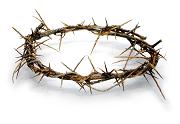
This year, I'm not ready, and the fact that it is late is a great mercy to me, for as we count down the final hours, still I am not ready. This year, I don't want Lent to come.
It is not that I haven't prepared, or that I haven't chosen my penance. Rather, it is that I am not ready to repent and I dread both repentance and the penance I owe, even knowing the depths of God's mercy and the fact that my penance can never match the depths of my sin and the ends to which I am drawn should I continue on my present course: Hell.
This year, I shudder at the sound of Lent, and I want to flee, but I cannot flee, for as Psalm 139 says, even if I fly to the ends of the earth He is there, to the depths of the sea and to the skies above...He corrals me like an untamed mustang.
I can do nothing but surrender.
 For the last several weeks, I have been working my way through LOST and tonight, I finished it, right on schedule. For weeks, between LOST and four seasons of DEXTER I have been pondering human frailty and the reality of life without Faith.
As it turns out, in my real life I have also been struggling with my own Faith.
For a couple weeks now, although I know I need to go to Confession, I have not gone. I desire to go, but because I am dealing with some questions and issues of unbelief, I have chosen, directly, not to go.
Why?
Because in spite of my deep queries, I believe in the Sacrament and the Authority of Christ.
And because I have not gone to Confession (and need to), I have not received Our Lord in Holy Communion for a few weeks now.
I am grateful for the graces of Spiritual Communion, but for now, I cannot approach and receive Jesus from the altar; I am not either objectively or implicitly disposed.
Yes, it IS hard to stand aside to let others leave the pew while they glance at me in askance, but I will not go forward even for a blessing, for, quite honestly, this is the wrong time for a Blessing stolen only to deflect my Pride in the face of the unasked questions of strangers regarding the state of my soul.
We all fall short. We all sin. We are all LOST.
I've watched the entire series now, in only a few weeks, hoping to be done by the start of Lent. While I enjoyed it and didn't "get" some of the stuff imposed upon it or supposed from it, I will say this: there is one line that broke through my own heart, and it's something I take with me into Lent, and hopefully beyond.
In the final season of LOST, Jacob says that he chose them not for who they were, but for who they were not. (Not his exact words). He chose them because they were all flawed. They were alone, they were already lost, and they were already broken. He chose them in order to give them something for which to live...and for which to die.
I admit I was brought to tears by this for I, too, am flawed, alone, lost, and broken.
I can't pray the prayer of Queen Esther without tears, for whenever I give voice to it I am desperate, even though it speaks to my constant condition: "Help me, Lord,l for I am all alone, and I have no one but Thee."
Esther cast herself upon the Mercy of God, who chose her not for her status, but for her lowliness. He heard her prayer even before she prayed it.
That struck me in the script for LOST: even though it wasn't a religious show by any means: the reality is that God does indeed choose us for our humility, but never for our Pride.
We may be chosen for the purpose of purification but in the end, we learn to choose Him through sacrificial love. Not love of ourselves, but love of others, for their good.
That is true charity.
This year, I enter into Lent unwillingly, but still with the intention to observe the penances and sacrifices. This year it will be harder than ever, for I also enter without Faith. I enter Lent, this year, with nothing to offer, and truly, neither am I open to receive.

I enter this Lenten Season as Judas for even as I profess to follow Jesus, I cannot claim to be one of His Own.
My kiss, right now, to Jesus is one of betrayal. I know He chose me out of my solitude and brokenness and reached out to me because I am lost. Yet all I have to offer is a kiss of betrayal.
My only prayer, this Lent, is that by the Triduum I will come to Him with absolute trust in His Mercy.
For now, I have a long ways to go.
I am grateful for these 40 days to give me a chance to take back my kiss, to take back my stolen 30 pieces of silver and to instead, embrace the shadow of the Cross that falls over me.
Judas was lost because he appealed for mercy to the wrong authority. It wasn't because he wasn't repentant, but because he refused to speak to the One whom he had offended.
Tomorrow, I will receive Ashes, and with the watered-down admonition to "Repent, turn from sin and believe in the Gospel". This is all well and good, and I might have to actually, through my work, impose those words upon another, should Father (my boss) tell me to do so. I will be obedient to that should he conscript me into that service.
What I prefer and want to hear, though, and want to impose upon others is this, the harshest of introductions into Lent and that which helped me grow up:
"Repent, man, for you are dust and to dust you shall return."
If we lose sight of our final ends, that of eternity, Lent has no meaning whatsoever.
No one around me, priest or layperson has, in recent months reminded me of my final end. To do so is politically incorrect.
If Lent doesn't do it...then I have no reason to repent. If Ashes have no meaning for me, neither does the Cross.
If neither Ashes or Cross have meaning
...why should I repent?


Wednesday, March 24, 2010
Fall in Love Again

I was ready to just walk away from the whole mess. Every so often I get fed up with the snark and vitriol of the internet world, and truth be told, I get fed up with myself as well.
But I can't delete myself, so I don't really see how deleting my blog will help anything.
It's been a tough Lent, maybe my personal worst EVER. I fall...I get up. I fall again. I get up. I fall again. It's like my legs are made of rubber. I can't get out of the dirt, but then again, all I'm looking at is dirt. Even when I get to the point that I'm ready to lift my eyes, something else happens and I am thrust once again into the throes of disaster. I quite literally haven't been able to lift my head for weeks!
I've realized some of the problem is in my prayer life; I had intended to spend MORE time in prayer each day, but I haven't been faithful to that. In fact, I don't think I've even really tried! It seems, actually, that the closer we get to Holy Week, the less focused I am, and the worse I'm doing.
 This morning though, while walking my dog, taking in the fresh air and sunshine, I addressed these problems to Our Lord. I gave him my misery and asked Him about a particular insight that came to me last night. I gave Him my lack of Hope and my absolute weariness, asking Him, "When will this end? How can I be ready for Holy Week? How can I be ready for YOU?"
Jesus has been silent of late, letting me wallow, and for good reason. I prayed for conversion, for I realize that I am in desperate need of conversion. That is the goal of this Lenten season for us all, but I did have a special request and a special focus. Until today, I thought that I had lost focus. As it turns out, my prayer has been answered.
God is faithful.
As I see now, He was allowing me to really wrestle with my own sin, ask those deep dark questions, and finally fall, exhausted, into the mud. It is only here in this weariness that I could finally see what has been lacking. It is only by experiencing this utter blindness that I finally can recognize my spiritual desolation and from that point, be brought to conversion.
This morning, while walking, I finally heard Jesus speak, and His words were simple. "Look at Me."
Huh?
Again, the words came to me; not in a locution, but in that still, small voice from within: "Look at Me. I'm right HERE. LOOK at Me!"
And I looked...and that's when I understood.
I've been all over the place this Lent. I've been looking elsewhere, but He was within. He called, he shouted, but I couldn't hear because I had taken my eyes away from Him.
Conversion isn't some difficult theological construct. It doesn't require knowledge or philosophical understanding or complicated definitions.
 Conversion is, simply put, falling in love. It is the state of turning toward God, toward the Author of Life, and allowing oneself to be inflamed by the fire of Divine Charity.
All Jesus asks us to do in Lent is to fall in love with Him again.
All He is saying is, "Look at Me."
When we do, when we really look at Him, we can't help but fall in love.
Late have I loved you, O Beauty ever ancient, ever new, late have I loved you! You were within me, but I was outside, and it was there that I searched for you. In my unloveliness I plunged into the lovely things which you created. You were with me, but I was not with you. Created things kept me from you; yet if they had not been in you they would have not been at all. You called, you shouted, and you broke through my deafness. You flashed, you shone, and you dispelled my blindness. You breathed your fragrance on me; I drew in breath and now I pant for you. I have tasted you, now I hunger and thirst for more. You touched me, and I burned for your peace.
~ St. Augustine, Confessions
Friday, March 12, 2010
Embrace

It's been a long rough road, and the burden has been anything but light.
A year ago I had a "revelation" that I might be called to be a Passionist Nun. I went to my spiritual director, wrote to the Passionists in Kentucky for info. They responded via email, I responded in turn, then heard nothing more.Several weeks passed, and at the time I was having some technical problems with my email, so I re-sent my response and apologized if duplicate, explaining the email situation.Still nothing.
I realized it was a slammed door, and that slammed door was a bit devastating to me.Things worked out, though, and I went on other visits to other communities who invited me to visit even without my request.It was a good experience, if a hard one, and I returned home with much to ponder.
Then last fall, I entered a pretty deep "depression", so conflicted within myself, so confused as to what God was asking, certain He was calling me to religious life...but I didn't want to go. It was horrible; I wasn't certain of anything, but all I knew was that I was rejecting God, and I didn't know why. I was bitter, I was angry (bitter and angry are my default settings, as it seems), and couldn't seem to climb out of the pit from Hell I'd fallen into.
Slowly, though, the clouds cleared, I came back out by God's grace and went back into "I want to do God's will no matter how much I think it sucks" mode, which, in that case meant remaining single...or religious life. Whatever. Two sides of the same awful coin. (And yes, I saw all my options as awful. I still do.)
Over Christmas break when I finally had time to read and pray for"fun", the contemplative life again tugged at my heart and soul. I couldn't ignore it. I've since written to a couple contemplative communities, one of them being the Passionists in St. Louis Missouri.
To my surprise, I received a wonderful, welcoming and joyful letter in return. Enthused by their response I wrote my own long letter...and couldn't seem to actually send it. I went back and edited, printed it, stuff it in an envelope, addressed it...and it still sits on my kitchen table. Two months later.
I feel rude. Very rude. But...I can't pop a stamp on that thing and send it. I CAN'T.
Their reaction was so blessedly different than the canned response I got from Kentucky followed by a non-response, and here I am, NOW the one giving the non-response.
Eventually I need to respond and explain my delay, and I know they will understand. After all, they're in the business of discernment and don't want anyone there who doesn't belong there. And really...I don't belong there.
Today I was at a morning retreat and spent an hour praying a Passionist devotion; a Chaplet of the Wounds of Christ. Over and over again. It was in that repetition that I came to realize that, well...God wants me to embrace the Cross, but not in that particular way. It's time to close the door on my end and make it stop swinging this time. I'm letting go of this particular idea. I am not called to be a Passionist Nun, so that particular romance is over. That does not mean I don't love meditating on the Passion and the Cross. It means only that I am not called to reside in that terrible and joyful shadow.
Wounded Bride
In June, God willing, I'll be awarded my Master's degree, finally, if I can actually make it through or over this brutal wall of the last few months. As it is, every time I open one of my books I go cross-eyed and my brain goes into some kind of a coma. I am assured this is normal for last-semester graduate students at any level and in any degree field.
Still, the closer we get to our end date, the more I ponder why I am receiving this degree. I don't know what it's for. I don't know how I'm going to pay the loans, especially given that no one will hire me but the Church...and the Church isn't interested in paying my graduate school, or my undergrad loans, for that matter. In fact, the Church isn't interested in paying my mortgage or my electric bill or anything else.
So why have I spent three years elevating my debt? Why? It sure doesn't help me enter religious life if that's what I'm called to. I laugh to think of all the times people have queried either to me or to others, or just randomly about the idea in general, "Is this just an escape from real life?"
HA!
I've never seen religious life as an "escape" as much as the secularists love to offer that idea. Having explored religious life, it is ANYTHING but an "escape"! Rather, it is life lived with far more intensity and purity than anyone can find in the so-called "real world."
Even as I sense an attraction to the contemplative life, I am surrounded by the open wounds of the Mystical Body of Christ, and I find myself doing "damage control" here and there. I recall my training as an EMT and remember the chapter on Triage. Some days, I think that's all I'm doing.
Being Catholic is like an eternal September 11 (which as you may recall, I remember quite poignantly due to my Job at the time.) Or maybe it's like being an army medic on the battlefield of a war with no end, in every time in history, all at once. The only thing the Faithful can do is to respond to the horrific wounds resulting to people who are victims of society and culture, even as so-called "friendly fire" continues to shell the city, and buildings continue to fall, and looters continue to take what isn't theirs until a building finally lands on them...and we are called to address their crushed limbs as well.

A friend of mine (CK) once advanced the question of how we would react if the wounds of the souls around us were visible as physical wounds; how would that change our reaction to them?
I go a step further...how would that change our understanding of the intent of Vatican II?
It's the difference between putting leeches on a man who is in hypovolemic shock and bleeding out (hello United Nations One World Government) or offering our own veins to be sapped of our blood to give to the wounded through IV's and personal treatment according to need...and Salvation. And bringing them home to care for them ourselves. Bringing them into OUR Family...the Church.
There isn't anything in between.
Missionary
The Church is nothing if she does not live up to our Mission to the world. This is the responsibility of all of us.
So often, this Missionary focus of Vatican II is interpreted solely as a response to physical need, but in our culture, in our politics, in our health care, the real need isn't physical; it's spiritual.
America isn't imploding and falling apart at the seams because of poverty; we are imploding because of a spiritual need that is not being fulfilled.
We have to remember that the works of mercy are both physical and spiritual, and right now, we have an overabundance of people wreaking havoc trying address physical needs of the world while they themselves are impoverished in their own spiritual deprivation. Even as they seek to help the poor, they are limited and they are failing because they cannot give what they do not have: spiritual health.
While praying today, I begged God to tell me what He wants me to do. Why am I getting this degree? To go into a cloister?
As I read the letter from the Passionists again, one of the things that unsettled me the most, I think, was Sister's comment about my education; great fruit for contemplation, but maybe a source of frustration for those who do not actually care about theological education.
I can't see God educating me to send me to a dead end where it will not be used (as dear Sister seemed to hint; they aren't interested in theological studies in that particular monastery.) God MUST want this degree to go to some use, to build up His kingdom. Otherwise I'm nothing more than a welfare kid holding an expensive piece of paper with no actual value to anyone but me...and if it's just for me, it's of no value whatsoever.
We never really possess anything, and nothing has any value if it is not shared with another.
We can't give what we don't have, and we don't have anything until we can give it away.
I no longer have any passion at all. Not for religious life, not for anything.
I am at an impasse; I know I am called to respond to the spiritual deprivation in our society. I know that the best and most noble response is the contemplative life. I know I am not called to the physical missionary fields, yet, I am missionary for as a Catholic my mission is to all who are lost...and the lost are EVERYWHERE. Not thousands of miles away.
More and more, I think that maybe I am called to visit another monastery, but only so it can be put aside; I think God calls me to maintain a presence in the world, using what I've learned in practical ways, for there is a lot to be done, and few hands willing to do it.
 I stand this Lent, at the foot of the Cross, in my arrogance telling Jesus what I will and what I will not do and He bears me in patience while He bleeds and gasps for air.
Yet my own hands still hold rocks and sand and gravel as I say to Jesus, "I can't do any more than this. I have to hold on to this stuff."
Then Jesus Crucified opens His own hands with great effort, in excruciating pain, struggling against the muscle spasms, and tells me, "If I can do this...you can drop what you hold...and embrace the same cross and the same nails I release right now."
No....I don't have any passion for anything at all. Instead, Jesus has brought me into His own....and He will direct the outcome.
Thank you, Jesus.
Sunday, March 07, 2010
Byzantine Divine Liturgy - Ruthenian Rite

This visit to the Byzantine Church was the first for all of us, and we knew some very basic differences and that the Divine Liturgy (their term for the Mass) is quite different than what one would find in a Roman Catholic Church, although it is the same thing; the re-presentation of the Holy Sacrifice of Calvary.
For those who may not know, the Eastern Churches make the Sign of the Cross from right to left, as opposed to the Roman version which is left to right. As today, the 3rd Sunday of the Great Fast, they celebrate the Sunday of the Holy Cross, there is an explanation in their bulletin for the very reason for this tradition:
"Blessing oneself with two fingers brought to the thumb represents the Trinity. The last two fingers held to the palm represent the two natures of Jesus - God and man. For the first 1,200 years of the Church, in making the Sign of the Cross, the hand was typically brought from the right to the left shoulder even in the Western Church. In the East this is still the practice, to signify Christ enthroned at the right hand of the Father. According to tradition and in the words of Pope Innocent II (1198-1216), the Sign of the Cross is made with three fingers because it is impressed upon us in the name of the Holy Trinity. From the forehead we pass to the breast, then from the right to the left."
I admit I did not know this as the reason for the difference and I will have to look into why the tradition changed in the Western Church (that's us, Roman Catholics!). I surmise there must be a theological reason for our tradition of left to right, or we wouldn't be doing it. Does anyone know?
 We arrived early, and upon entering the Church was empty. I took the opportunity to take a couple photos of the very small church, which was built in the Western style, but inside, was clearly Eastern in worship. The Iconostasis was striking, as was the scent of incense that permeated our senses. We knew immediately that we were in for a real treat! Nothing says "Heaven touches earth" than the smell of incense!
All of us are familiar with both expressions of the Roman Rite: the Ordinary Form (often pejoratively called the "Novus Ordo") and the Extraordinary Form (often pejoratively called the "Pre-Vatican II Mass"). Of course, what this means is that we all immediately were attracted by the holy scent of incense which does amazing things to prepare one, all by itself, for the Holy Sacrifice of the Mass, or, in Byzantine Terms...the Sacred Mysteries.
When a few people arrived, we went out into the entry area with the children as their footsteps and toddler commentaries echoed throughout the space, and we wanted to be respectful of those who desired to pray and might better do so in silence. After all, as guests in a new place, we wanted to be polite! Besides, not knowing the character of the Church, it is always best to stand back an observe as opposed to insinuating oneself into a situation!

As it was, we became the impromptu "welcoming committee" for the regular parishioners, most of whom seemed thrilled to run the short gauntlet of young families and children. Several people commented on the dear children and how welcome was their presence. Even though I am not called to marriage and have no children, I have to admit it warmed my own heart to hear and see such expressions of love and welcoming for them.
Still, though, I have to admit; I now have a new appreciation for Protestants and other non-Catholics who visit a Catholic Mass for the first time, knowing only the most rudimentary things. I think I had the same misgivings and really, wanted to be sure not to offend. I was quite comfortable with the idea that we would stand out as visitors (well, not exactly "comfortable"...more....acquiescent to the terms of being a visitor to something new) and even more so when we saw the small size of the church itself. While when I first attended my own parish I could "hide", but here, it was impossible for any of us to simply "blend in." We all knew it up front and just went with the flow.
A wonderful thing happened, though, as we waited for the Divine Liturgy to begin: an old friend of mine from college walked up the steps and into the Church. I haven't seen him in years, but he looks just like he did back then. (I swear..some people NEVER age!). On the other hand, I've changed quite a bit (I got fat like the rest of my Irish farmer family), but simply didn't have it in me to pretend I didn't know my old friend. Initially he didn't recognize me but all was well, he introduced us to his daughter and spent some time talking with us, helped us with some common things, emphasized that at Communion we should not stick our tongues out as Roman Catholics are wont to do, and, we found, he himself had prepared the leavened bread to be consecrated at that Mass! (Yes, this is proper in the Byzantine Church and it's not something EVERYONE does.)
Initial Observations:
When people entered the church, they did not genuflect as we do in the Roman Church. It appeared that they reverenced (kissed) the icons upon entry, some wrote something in a book (forgot to ask about that), and bowed before entering their pew. Instead of kneeling to pray in preparation as we do, they stood for a time, then sat. This is of course quite alien to the Roman but given our surroundings, did not seem "out of place".
The parishioners were very helpful and directed us to the books and guides that would help us follow along, and I found that, in fact, the Liturgy was very easy to follow as it was in English. While (I think) there were a few songs and prayers in Slavic, overall most was in the vernacular with all the traditional chants.
 Divine Liturgy
There are no musical instruments in a Byzantine Liturgy. As some explanations for this go, all come as they are, with what they have, and who they are. Instrumentation is not necessary, for God gave us voices to raise to Him in praise and supplication; nothing else glorifies God so much as that which He Himself created.
The melodies were very easy to follow, and believe me, there is a LOT of singing in the Byzantine Rites! But in those places where the choir sang, and although I am familiar with Byzantine Chant, it is an entirely different thing to hear that chant in the proper setting of the Liturgy.
Oh! I know now how angels sound when they sing their eternal praises to God!
I'm sorry, but very little of the music I have EVER heard in the Roman Catholic Church can compare to the simple chants of the Byzantine Liturgy.(click the link to go to a Byzantine site where you can hear the chants and order the CD.) And I put their music far over and above what we hear even in the holy ostentatiousness of the Baroque choirs of Mozart and his ilk at the infamous St. Agnes. (Which I admit, quite un-popularly, to be quite loud and too ostentatious at times. Sorry to those who love it, and yes, I do think it is far better than the Broadway faire of Haugen-Haas)
For those who have never experienced an Eastern Liturgy of any type, it is quite different. There are some similar elements, but it takes a LOOONG time to get to those things we recognize, such as the readings (which differ from ours) and the Consecration, which DOESN'T have bells to call our attention to it. Incidentally, there ARE bells in the first half of the Divine Liturgy, although I forgot to inquire as to the significance.
In following along, though, what impressed me was the ongoing praise to God alternated with the cries for His mercy, which is what the Liturgy throughout the Church, properly done is all about: knowledge and praise of God, while coming to know oneself in the face of God. So much of this is lost in the Roman Liturgy, not because of the liturgy itself, but through the music which, in the Roman Mass, tends to be more of a celebration of ourselves as opposed to great praise and supplication to God. (This is the point of reform within the Roman Catholic Church, and for good reason!)
There was absolutely no doubt, in this Liturgy, to WHOM it was addressed, and WHY. Yet, for those who want to juxtapose the interior with the exterior practices of our Faith would find them quite united here. I think that those who love to focus on the physical participation in the Mass in the Roman Catholic Church would find their home here in the Byzantine, for there are few pauses and it is dominated by the active singing and response of the congregation. In fact, I know someone who has a very difficult time focusing unless she is doing something at Mass, and may really find that the Byzantine Divine Liturgy keeps her attention as it demands a constant response.
I have to wonder if the minds behind Sacrosanctum Concilium were looking at the Eastern Liturgies as they wrote that document, seeking to combine the focus that has always oriented the Liturgy in all Rites to God with both the interior participation as well as the "active" participation of the Faithful.
The Doors and the Icons
While the Byzantine Church also has an Offertory (for which I was not prepared today, to my shame), it is followed by the Liturgy of the Eucharist, which again, differs greatly but was still helpful in orienting me as to what was going on at the time. The book containing the Liturgy of St. John Chrysostom was very helpful, but still, I found that I needed to be focused on what was happening in the sanctuary through the opened Doors, to which our attention is called throughout.
 To explain, briefly, the Iconostasis, which operates much like a Communion Rail in a Roman Catholic Church (in those few where it remains), separates the human world from the heavenly world. It contains 3 doors: in the center are the Holy (or Royal) Doors, which open to the Sanctuary where the Blessed Sacrament is reserved, and represent the Gates of Heaven. Only the Priest may pass through these particular doors; any others are automatically excommunicated for the infringement. The Deacon's Door, to the right, is graced by the image of St. Stephen (at least at St. John the Baptist), the protomartyr behind which we see the Deacon's Altar. The door to the congregation's left is the Server's door, and portrays most often, and clearly in this particular Byzantine Church, the icon of St. Michael the Archangel.
Of note in every Byzantine Church, you will find on one of the doors to your right, the icon of St. Nicholas of Myra, the Patron of the Byzantine Church.
Holy Communion
I admit I was nervous to receive Communion in the Byzantine Church, if only because it is a little different. I am accustomed to receive on the tongue, so opening my mouth to receive Our Lord isn't the problem. Rather, because this is such a Holy Moment, a Holy Action, I wanted to be certain that if I screw up at any point, it wouldn't be THAT point! I even seriously considered not receiving at all!
Yet I knew I could...I went to Confession yesterday, am sure I had not committed any mortal since since my Confession, and really, the newness shouldn't detain me. Yet..that's just me. I'm a wimp and often want to hang back instead of trying new things, especially when making a mistake with new things can become sacrilege.
I had asked my friend, in the entryway about this, and this is where he emphasized to receive by tilting the head back, mouth open. For all the Roman Catholics out there....do NOT stick out your tongue! He laughed about how they always know a Roman by the instruction, "Tongue in!" and according to habit, we stick our tongues OUT to receive!
Not in the Eastern Church. I actually LOVED Holy Communion in this form, so I will explain it from a newbie perspective in anticipation of other newbies:
You will queue up like we always do. Like the English, we Roman Catholics in America are very serious about our queues, so you can expect here what you do at Communion time at Mass.
There is a small table (Tetrapod) near the front containing an icon (Pictured) with two candles on either side. Today, as we venerated the Holy Cross, the Tetrapod contained an icon of the Crucifix. At Holy Communion, consistent with the spirituality of each person coming to God as they are, each person went forward to the Priest to receive. We formed two lines, waited at the Tetrapod. and when the person before us had moved aside, went forward.
I noticed that the server beckoned me...I don't know if he does that for each person or just for newbies. It could be that I waited too long to advance.
The servers on either side of the Priest hold up a red cloth (I know there is a name for this, please inform me) beneath the chin of the one receiving. Many people bent their knees, and although I am short, I did a little, too, to make it easier for the Priest. Make a sign of reverence while standing in line (much like the Roman Rite), then approach, the Priest will offer Christ from a chalice where the leavened bread that has become the Body of Christ is mingled with the Precious Blood in the Chalice that he holds. If needed, bend your knees, open your mouth (tongue in!), and the Priest will use a spoon to place the Sacrament in your mouth.
I have read this too, and know this is hard to envision. But I can tell you this: today I KNEW I had received God Himself, the very BLOOD AND FLESH of Christ on my tongue. I can't describe it, but it is completely different from the physical "feeling" of Holy Communion in a Roman Catholic Church. I have received by valid intinction (consecrated hosts on a paten with a small chalice attached, where the Priest intincts the Host) in a Roman Catholic Church, but this was still a bit different.
I have a strong devotion to the Precious Blood of Christ, but don't often receive from the chalice, and found that Holy Communion today has brought me more deeply into that particular devotion in a way I will not soon forget.
After Holy Communion, the Faithful return to their pews and stand, for in the Eastern Church, THAT is the sign of reverence. I knew this in advance and thought that I would miss kneeling, and indeed, I WANTED to kneel. This Church had kneelers utilized by some, but I found that I wanted to remain standing given the practice and the ancient sign of respect in this Church. After all...when in Byzantine, do as the Byzantines do.

I did not have that sense of discomfort today. That speaks volumes.
Dismissal
During Holy Communion there are several Hymns, and following, prayers of Thanksgiving. There are more prayers to be merciful to we, the sinner, supplications to God, and an admonition from the Priest to be attentive to Our Lord and the Holy Spirit, as I recall. (I'm sorry I can't link to this part of the Liturgy)
There was no procession out to which we Romans are accustomed.
The people in front of us took this time to introduce themselves and welcome us to their church, invited us back, exclaimed over the children, and said that they had been raised as Roman Catholics. Lovely people, and for some reason, reminded me of Texans. I don't know why and can't explain this. (no accent, they just..quirkily, made me think of Texans).
But because they were so homey and personable,and seemed so informal even though something was STILL going on in the Church, I was a bit discomfited. I was watching the Faithful filing forward, as if for Holy Communion, instead of filing out.Clearly people were receiving a blessing from the Priest, who was holding a glass bowl containing what appeared to be oil.
To either side stood servers, the one to my left holding the Bulletin, the one to the right holding a basket and a bulletin.
The man I asked explained that because it was the Sunday to venerate the Holy Cross, they were going forward for the veneration of the Icon of the Cross, and then to the Priest for a blessing. He explained that the basket contained the bread that was not used in Communion.
I went forward, kissed the Cross, and found that the person in front of me was engaged in a conversation with the priest. I'd started to move forward but saw that I should wait as their conversation continued...clearly this was more informal. It reminded me of the Roman Rite of the Liturgy of the Priest Greeting after Mass.
 The Priest used what looked like a fine-tipped paint brush to paint a cross on my forehead with the holy oil from the bowl. I had to hold back my bangs for this, as did other women. He spoke in Slavic, so I have no idea what he said.
 I did not take any of the bread from the basket, but one of my friends asked the Server if it was the Eucharist. He said that it was.
No, it wasn't. It was blessed bread, but as I understand, not consecrated, so not Christ Himself. This was a cause for concern for a time, but my friend explained it to us (thankfully!) and I can assure anyone who experiences this that no one is desecrating the Eucharist!
After this, we received a tour of the Church, I took photos of the icons while listening, and find that I will need to attend again both with more knowledge of the Ruthenian Divine Liturgy, and to get better photos of the icons.
I left feeling blessed, knowing that I had received Our Lord, and with a greater appreciation of the Universal Church.
Thank you, Jesus.
***Update: Reminder regarding the commenting policy: Please assign a name to yourself. "Anonymous" comments will be deleted. *****
Saturday, February 27, 2010
The Theology of the Rant
“Nothing is so strong as gentleness, nothing so gentle as real strength”
~ St. Francis de Sales
I've really been praying about this, and in examining my conscience, my occasions of sin, etc., I've really had to hold a mirror up to myself and accept responsibility for my own contribution to the problem.
We all seem to love a good rant. It gets us fired up, it sets off a domino-effect in the echo-chamber that is the world of blogging and social networking, and the next thing you know we're all fired up and ready for a good fight.
Oh, wait...what does THAT have to do with holiness?
One of the things I noticed is that either in writing or reading a rant, I can FEEL my blood pressure rising, and at times, it sets my blood to the boiling point. In the past I've tried to justify my own feelings or behavior by saying, "Well, there IS such a thing as righteous anger!" And yes, well, SURE there is! But the difference between "righteous anger" and "ranting anger" is that, well, I'm in control of the former, and the latter controls ME.
Now, I'm not saying that all "rants" involve anger. Often they do not. Sometimes they are simply humorous outtakes on situations, sometimes they are simply a passionate statement on some topic, and written for the point of positively getting people "fired up" to take some kind of action. The fact is that as we are humans prone to all sorts of things like laziness and apathy, at times we NEED to have a fire lit under us to get us up off our rear ends. In light of this, please understand that I am not condemning anyone in particular or any posts in particular. Nor am I saying that people should not write with passion! What I am trying to point out is that there is a difference between "writing with passion" and "ranting". Sometimes the lines are blurred, and we have to learn to recognize those lines.
I can't always.
A few weeks ago as I began to ponder my own Lenten sacrifices, and the point of them, which is conversion, I took a look at my own blog and noted a few things in the blogs of others. For awhile now I've been avoiding the ranting-tone writings of many bloggers, for I noticed that they do to me, physiologically-speaking, what the sudden use of curse words would do when I worked in adolescent psych: it upset my balance, it sent me into stress mode, and it caused me to want to make an immediate response. Adrenaline.
I shouldn't need an adrenaline dump if I'm sitting at my computer. It's a waste of perfectly good neurochemicals and quite honestly, it distracts me from God. It distracts me from prayer. It disturbs the peace which should remain with me as I struggle constantly to keep focused on the Lord.
In all honesty, I'm sick of reading about complaints about the Church, and I'm sick of writing them, too. We as human beings are so given to criticism, to focusing on the negatives in the Church, to carrying on the rants of others and making them our own. But do we ever stop to consider whether or not our rants are BUILDING UP the Kingdom of God? Do we ever stop to consider whether our rants truly Glorify GOD, or are they just self-seeking pleas for personal glory from a rant-happy crowd of unhappy Catholics, feeding further into their (and our) own unhappiness?
Is there true goodness in that, or do you, like me, smell the acidic scent of sulpher?
As I've been discerning the Visitation Nuns, I've pondered more the words of St. Francis de Sales, their Founder, and his gentle approach. Time and time again I've come across writings of Saints, and statements about them, referencing their continual kindness towards others, their constant peace and gentle responses even in the face of outright hostility, dissent, etc. I am further convicted by the book I'm reading for Pastoral Theology: Jean-Baptiste Chautard's "The Soul of the Apostolate." He references this reality of holiness, and how souls are won not through harsh correction, but by a gentle, consistent response and patient teaching. Even those that seem "lost" come around when they recognize the need to drop their own hostility, for it is not being returned in kind...ever. They recognize, in a gentle response: God.
True holiness cannot be attacked, cannot be undermined, cannot be destroyed. It needs no defense. The most an attacker can do is destroy the body, when truly they are trying to destroy God in the soul of that holy person. This is the reason for all the martyrs throughout the history of the Church. God can't be killed.
Why, then, do we become so defensive and angry when our faith is attacked? Why are we so ready to respond with condemnation and judgement and vile, mean-spirited humor? When, in the history of the world, has THAT tactic EVER won souls?
Although St. Francis of Assisi and St. Anthony were known for their impassioned preaching, they did not descend into sin by allowing anger or frustration to control them. What shone forth in their words was the very passionate love of Christ and zeal for souls that hadn't a bit of anger in it. They had no need to be angry: the Truth speaks for itself, and is sufficient in and of itself to win souls.
St. Francis de Sales, another great preacher, suffered a great deal in bringing souls back into the Church, and many are not aware he had a problem with his temper. Do you know that after he died, they discovered GROOVES worn under his desk from him scraping his hands in frustration underneath, as he struggled to keep his anger and frustration at bay? Yet, none ever saw anything but an enduring patience and expressions of true charity for those who he sought to help.
In light of all of this, and in light of all I am continuing to read, I've decided to take it all to heart. Although I am fond of passionate writing, I will do my best to keep it from being a "rant" so that none will read anger, especially where there isn't any! I will try to avoid any use of sarcasm (for which I have a special, but clearly disordered "love"), and as I have been, I will continue deleting old ranting posts. I may even clean up those posts that seem angry in tone, albeit only as I have time. (School takes precedent over all of this.)
For Lent, I'm going to work on focusing on what is GOOD about the Church, even as I also continue my focus on the Passion and Death of Our Lord. Yet, I hope my "rants" are over, and maybe for good. Lent is a time for conversion, a time to re-focus on God and grow in holiness.
If we are not growing in holiness, then what ARE we growing?

St. Francis de Sales... pray for us!
Subscribe to:
Posts (Atom)