Formerly ascribed to Lactantius (source: NewAdvent.org):
Whoever you are who approach, and are entering the precincts of the middle of the temple, stop a little and look upon me, who, though innocent, suffered for your crime; lay me up in your mind, keep me in your breast. I am He who, pitying the bitter misfortunes of men, came hither as a messenger of offered peace, and as a full atonement for the fault of men. Here the brightest light from above is restored to the earth; here is the merciful image of safety; here I am a rest to you, the right way, the true redemption, the banner of God, and a memorable sign of fate.
It was on account of you and your life that I entered the Virgin's womb, was made man, and suffered a dreadful death; nor did I find rest anywhere in the regions of the earth, but everywhere threats, everywhere labours.
First of all a wretched dwelling in the land of Judæa was a shelter for me at my birth, and for my mother with me: here first, amidst the outstretched sluggish cattle, dry grass gave me a bed in a narrow stall. I passed my earliest years in the Pharian regions, being an exile in the reign of Herod; and after my return to Judæa I spent the rest of my years, always engaged in fastings, and the extremity of poverty itself, and the lowest circumstances; always by healthful admonitions applying the minds of men to the pursuit of genial uprightness, uniting with wholesome teaching many evident miracles: on which account impious Jerusalem, harassed by the raging cares of envy and cruel hatred, and blinded by madness, dared to seek for me, though innocent, by deadly punishment, a cruel death on the dreadful cross.
And if you yourself wish to discriminate these things more fully, and if it delights you to go through all my groans, and to experience griefs with me, put together the designs and plots, and the impious price of my innocent blood, and the pretended kisses of a disciple, and the insults and strivings of the cruel multitude; and, moreover, the blows, and tongues prepared for accusations.
Picture to your mind both the witnesses, and the accursed judgment of the blinded Pilate, and the immense cross pressing my shoulders and wearied back, and my painful steps to a dreadful death. Now survey me from head to foot, deserted as I am, and lifted up afar from my beloved mother.
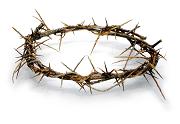
Behold and see my locks clotted with blood, and my blood-stained neck under my very hair, and my head drained with cruel thorns, and pouring down like rain from all sides a stream of blood over my divine face.
Survey my compressed and sightless eyes, and my afflicted cheeks; see my parched tongue poisoned with gall, and my countenance pale with death. Behold my hands pierced with nails, and my arms drawn out, and the great wound in my side; see the blood streaming from it, and my perforated feet, and blood-stained limbs.
Bend your knee, and with lamentation adore the venerable wood of the cross, and with lowly countenance stooping to the earth, which is wet with innocent blood, sprinkle it with rising tears, and at times bear me and my admonitions in your devoted heart.
Follow the footsteps of my life, and while you look upon my torments and cruel death, remembering my innumerable pangs of body and soul, learn to endure hardships, and to watch over your own safety. These memorials, if at any time you find pleasure in thinking over them, if in your mind there is any confidence to bear anything like my sufferings), if the piety due, and gratitude worthy of my labours shall arise, will be incitements to true virtue, and they will be shields against the snares of an enemy, aroused by which you will be safe, and as a conqueror bear off the palm in every contest.
If these memorials shall turn away your senses, which are devoted to a perishable world, from the fleeting shadow of earthly beauty, the result will be, that you will not venture, enticed by empty hope, to trust the frail enjoyments of fickle fortune, and to place your hope in the fleeting years of life.
But, truly, if you thus regard this perishable world, and through your love of a better country deprive yourself of earthly riches and the enjoyment of present things, the prayers of the pious will bring you up in sacred habits, and in the hope of a happy life, amidst severe punishments, will cherish you with heavenly dew, and feed you with the sweetness of the promised good.
Until the great favour of God shall recall your happy soul to the heavenly regions, your body being left after the fates of death. Then freed from all labour, then joyfully beholding the angelic choirs, and the blessed companies of saints in perpetual bliss, it shall reign with me in the happy abode of perpetual peace.
Adoro te devote, latens Deitas, quae sub his figuris vere latitas: tibi se cor meum totum subjicit, quia te contemplans totum deficit. *** Godhead here in hiding, whom I do adore, Masked by these bare shadows, shape and nothing more, See, Lord, at thy service low lies here a heart, Lost, all lost in wonder at the God thou art.
Showing posts with label Church Fathers. Show all posts
Tuesday, March 29, 2011
Sunday, December 13, 2009
Come, Lord, Do Not Delay
One of the things someone pointed out to me a few years ago, found prominently in both iconography and the writings of the Church Fathers, is the link between the Birth of Christ and His Resurrection. This is a critical link that many don't understand, for much sacred art showing the Nativity is very misleading: our Christmas cards show pristine views either in the desert with pretty palm trees on a clear night, or a snowy night much like those we might experience here in Minnesota, surrounding a cute little clean-looking cozy warm stable with angels singing overhead and animals cuddling around on the hay. Or perhaps some other warm-and-cozy scene eliciting feelings of vague pleasure that our secular culture has deemed to be "the Christmas spirit". This kind of art, while to the degree that Truth is allowed, can be beautiful and certainly may portray PART of the birth of Christ, unfortunately causes us to miss out on the fact that Our Lord Jesus Christ was born into the shadow of the Cross and in a place proleptic of His Resurrection. If we are missing this part of the story, it means that our preparation for Christmas during the season of Advent is lacking some focus, which follows, therefore, that we can't fully enter into the joy and celebration of the Christmas season!
The fact is that Jesus was not born in a nice cozy modern stable in a cow's stall (as the popular song proclaims), but rather, in one of the caves the surround Bethlehem, where the shepherds corralled their flocks at night to protect them from predators and the elements. Just imagine, then, what the FLOOR of that cave must have been like! Imagine, if you will, what covered the ground, and how deep it must have been! It's not as if the shepherds had time to design a manure shovel and clean it out and lay down some nice hay for the "guests"!
Jesus was, indeed, born in a cave. One of the nastiest caves on earth. And where was our Most Precious Infant Savior, our King, laid to rest? He was laid in a manger, something used to feed animals, which was never cleaned. It in fact, would have been the cleanest place in the entire network of caves, yet there, "clean" would be a relative term, wouldn't it? That nasty manger would have been lined with the spit of a thousand camels, and never mind the fleas! He was thus born into the very same relativism that personifies even our own culture today, the actual filth of his own age, and this is fitting, isn't it, for He is relevant to all ages, revealing Truth of eternity in a world in which very few awaited or wanted to receive Him.
Jesus was BORN into extreme suffering, and so we see the connection to the Cross, for as the Church Fathers remind us, the wood of the manger is the very same as the wood of the Cross. In the town with a name that meant "House of Bread", the Bread of Life Himself was placed in an animal's feeding trough, and yet, He came not to feed animals, but to feed US with His own Body, Blood, Soul, and Divinity...only to die upon the gibbit as a reminder of His own humble beginnings....and our own great Fall into sin.
This is why, in iconography, one can observe the cave through which Christ was born and entered the earth at his Nativity, and the same type of cave through which He left when He rose from the dead in order to overcome the grave for us, restoring our dignity by opening Heaven to so that we could reach our final end: eternal union with the Holy Trinity. Just as He arrived, so He left...in every way.
We must remember, in this season of Advent, and as we celebrate Christmas with great joy at the Incarnation, our God become man who came to save us from our sins calls us to follow in ALL His footsteps...all of them.
"Come, Lord, do not delay.
-Free your people from their sinfulness."
~ Liturgy of the Hours, Midafternoon, Third Sunday of Advent
Advent is a time of Preparation, so that we can prepare our hearts to receive the gift of Christ Himself, and in turn, make OURSELVES a gift to Him!
There is no greater gift we can give to Jesus but ourselves. We must take time in silence, maybe solitude, slow down even as the world speeds up, and realize what is truly important. The readings for most of Advent call us to consider final Judgement, reminding us of our final ends, giving us hope in our eternal beatitude with God, but only if we respond to His grace and work to eliminate sin from our lives. It is a time of darkness and purification, it is a time of confronting temptations and actual sins and vices that keep us from God. Especially when we consider the filth into which Christ was born, don't we want to be MORE certain of our own purity so that we can receive Him, offering Him the same mercy He provides to us?
If we saw a child lying in filth, wouldn't our first response be to pick him up, cuddle him and hold him close and warm, wrapping Him in pure, clean clothes? Yet, if we were filthy ourselves, wouldn't we hold back so that we would not contaminate Him further? Would we not first change our OWN clothing so as to ensure that our efforts would not make this child's condition even WORSE? If we had just come from a sewage pit, covered in the "fruits" of our labors, would we even CONSIDER picking up a child lying in a manger, knowing that the sewage dripping from us would make his own condition filth even WORSE?
I shudder when I recall that I was once one of those who lived in habitual and terrible mortal sin, did not go to Confession, and yet, at Christmas, for many years, I went forward to receive Him, this dear Holy Infant, into the profanity of my body and soul. I took the Christ Child into my own sewage, that of my own sinful soul, far worse than the filth into which He had been born!
Oh, how I shudder now to consider it! And how I shudder to realize that this happens EVERY DAY, it happens in HUGE numbers every Christmas and Easter when such large numbers of people return to the Church....but go forward to receive Our Lord in such a filthy state!
We should ALL ensure, then, that we are not in denial of our own sin. We should be using Advent as a true time of preparation, and maybe this is difficult. Maybe it's hard to face ourselves and the reality of our own immorality. Maybe we are in darkness because we have a war within us, an interior battle within which we realize we are in bondage to sin...and are unwilling to let go of the chains that bind us. Maybe we are afraid that if we go to the Sacrament of Confession, especially if it's been a long time, that we can't be forgiven. Do we inflict a "statute of limitations" on ourselves and condemn ourselves even though Jesus calls us to Him through the Sacrament of Penance in order to reconcile us to Him...so that we can receive Him in purity? Do we deny that we NEED the Sacrament of Confession in order to be ABLE to receive Him and be strengthened on this long pilgrimage to Heaven?
Or do we err on the side of sacrilege, approaching the Holy Altar of Sacrifice, having sacrificed nothing of ourselves, but presuming a place upon our own authority, demanding to be fed at the Table but refusing to partake in the Sacrifice to which we are truly called?
During this time of Advent, maybe in our introspection we are crushed, and finally realize how we have been defeated over and over again, how we have chosen love of some worldly, fleshly pleasure over love of God, preferring what is temporary to what is eternal. This is not cause for despair! It is a reason to rejoice, for this gift of self-knowledge, while difficult, is the very cave through which we are born again! It is the very tomb through which we must pass in order to live again!
We MUST see the parallel between the Nativity and the Resurrection, between the Manger and the Cross. We MUST see how, if we are to be conformed to Christ and live out our Baptismal call to Holiness, we have to live out, over and over again in our spiritual lives the cycle of crushing defeat and the darkness in which we are rebuilt, if only we are willing to cooperate with God's grace. We must be crushed, we must die to ourselves in order to learn to turn our wills more perfectly to God.Christmas isn't just a random celebration, a day off from work, a day to open gifts. It is a day that requires great preparation, for when we celebrate it, we should be offering the gift of ourselves, in purity, in joy, knowing that God has brought us through darkness and into redemption! Today, on Guaudete Sunday, in the Liturgy of the Hours we pray in recognition of the Redemption! Now, during Advent, we are directed not towards the Nativity, but towards our eternal Salvation!
Rejoice! Persevere through the remainder of this "mini-Lent" and know that your redemption is at hand!
"Let us cleanse our hearts for the coming of our great King, that we may be ready to welcome him; he is coming and will not delay."
Wednesday, June 10, 2009
Sacred Mysteries
Today somone on Twitter raised a question arising from today's Divine Office reading, taken from Origen's homily on Joshua. She thought he was talking about salvation being limited to a certain few, wheras he is actually speaking in the context of the Sacraments, ie "Sacred Mysteries."
No one may share the Eucharist with us unless he believes that what we teach is true, unless he is washed in the regenerating waters of baptism for the remission of his sins, and unless he lives in accordance with the principles given us by Christ.
We do not consume the eucharistic bread and wine as if it were ordinary food and drink, for we have been taught that as Jesus Christ our Savior became a man of flesh and blood by the power of the Word of God, so also the food that our flesh and blood assimilates for its nourishment becomes the flesh and blood of the incarnate Jesus by the power of his own words contained in the prayer of thanksgiving.
He explains here why others were not admitted to these mysteries, raising the demand of a conversion of life, of intent, of proving their ability to live "in accordance with the principles given us by Christ."
I'm going to quote a larger passage, not a "twitterable" one, so as to give better context which will aid in our understanding. (Words in bold were the passage being questioned.)
From Origen's Homily on Joshua:
"You have recently abandoned the darkness of idolatry, and you now desire to come and hear the divine law. This is your departure fro mEgypt. When you became a catechumen and began to obey the laws of the Church, you passed through the Red Sea; now at the various stops in the desert, you give time every day to hear the law of God and to see the face of Moses unveiled by the glory of God. But once you come to the baptismal font and, in the presence of the priests and deacons, are initiated into those sacred and august mysteries which only those know who should, then, through the ministry of the priests, you will cross the Jordan and enter the promised land. There Moses will hand you over to Jesus, and he himself will be your guide on your new journey."
There is actually a great deal of theology in this passage, and a great deal of history being alluded to which was relevant to Origin's audience. Thus I'd like to first point out that the overall context of the homily seems to indicate that those hearing it were converts from Judaism. In it, Origin is referring to their history, familiarity with Moses, the Red Sea, the Ark of the Covenant, etc. (I did not quote the entire reading for today). Had he been speaking to gentile converts, he would have had to explain these things as opposed to bringing them into the present and into the Christian understanding.
Now, as far as the text that the individual questioned, it seems clear to me that Origin is discussing the Sacraments. He refers to "initiation", and we refer to Baptism, Confirmation, and Holy Communion as the "sacraments of initiation". At that time, I believe catechumens received all three Sacraments at the same time.
If you read the passage again, it discusses the presence of priests and deacons, and specifically, that they are admitted to these mysteries through the ministry of the priests. This indicates the reception of Sacraments, as well as presence at the Paschal Mystery (e.g. the Mass)
What many do not understand is that Mass was not always so accessable to people. Recall that in the Early Church, Christians were greatly persecuted. All week in the Divine Office we've been reading about St. Ignatius; he was paraded to Rome in captivity to face his martyrdom, and in the process wrote something like 15 letters to those in his care. When he reached Rome, he was fed to the lions, and many other Christians, people like you and I, (from children to the elderly) also stood up and identified themselves publicly as Christians, and were ALSO sent to the lions.
It doesn't surprise me, then, that this reading follows, for the persecution of our ancestors was not the lame and cowardly persecutions we face today (at least, in America). Wheras we risk and suffer ridicule and maybe political "attack" in our countries, for them it was a crime to be Christian, and to publicly admit the affiliation was an automatic death sentence. A very torturous death, done for the entertainment of the pagan masses.
So it was that, in the Early Church, Mass was a secret meeting. The priests consecrated the bread and wine into the body, blood, soul, and divinity of Christ. They spoke of eating His flesh and drinking His blood, and yes, they did this quite seriously. St. Ignatius of Antioch, St. Clement of Rome, St. Irenaeus, St. Justin Martyr, St. Cyril, among others, all spoke of this Mystery (which today we call the Paschal Mystery).
There, deep in history, the rumor mill was just as active as it is today, even without benefit of the internet. The pagans, and others, sincerely believed the Christians were cannibals, and that they were meeting in secret in order to do their grisly and immoral deeds. Christians were hated and feared.
It was for this reason (among others) that St. Justin Martyr wrote Apologia, in an attempt to defend the Church, respond to the attacks, and put the rumors to rest.
At that time in history, strangers were not admitted to Mass. Catechumens (the non-baptized being instructed in the Christian faith, a term still used today) were barred from attendance until, for approximately three years, they had completed their instruction, had truly converted, and were ready to be admitted to the Mysteries. (To be specific, they were admitted to the Liturgy of the Word, ie the penitential rite, collect, Gloria, scripture readings, and the Homily, and were dismissed after this.)
St. Justin Martyr, in his 1st Apology, wrote about this practice:
We do not consume the eucharistic bread and wine as if it were ordinary food and drink, for we have been taught that as Jesus Christ our Savior became a man of flesh and blood by the power of the Word of God, so also the food that our flesh and blood assimilates for its nourishment becomes the flesh and blood of the incarnate Jesus by the power of his own words contained in the prayer of thanksgiving.
He explains here why others were not admitted to these mysteries, raising the demand of a conversion of life, of intent, of proving their ability to live "in accordance with the principles given us by Christ."
Those who became Christians then, through the Sacraments of initiation, knew what they were getting into. They were willing to die for it, and they were everyday witnesses to exactly what kind of death awaited them.
They were not willing to die for a lie, for a "mystery" that turned out to have been written by an early Dan Brown hack. When they were finally, at long last, admitted to the Church and initiated into those Mysteries, they knew what they were receiving, the importance of it, the sacredness, and the reality that this was going to cost them. They had to first die to themselves in order to risk dying for the Faith of Jesus Christ.
Salvation
Now, there was also the question of salvation, and I won't go into detail on this, but I can focus on some very simple beliefs.
We believe that baptism is NECESSARY for Salvation, and that no one enters heaven but through Jesus Christ. His suffering and death was for the remission of sin, paid the ransom owed, rendering Divine Justice through His perfect act of Mercy. But we must be baptized, the stain of original sin erased, and through this Sacrament, we enter the Church.
As Catholics, we recognize that Confirmation and Holy Communion complete our initiation into the Church, each Sunday we profess our Faith, and continue to live the sacramental life of the Church, even if it means that we receive the Sacrament of Confession daily if necessary! Even we who have been initiated are not admitted freely to the Sacrament of Holy Communion if we are in a state of mortal sin!
So, yes, Origin is ALSO speaking of salvation in this homily, but by no means is giving a discourse on that (no more than I am in this post!). His main point is the necessity and importance of the sacramental life, instruction in the relevence (and revelation!) of these mysteries for those upon whom the chrism oil still drips from their foreheads.
Today
Anyone can attend Mass today, no matter what their faith, and no matter how much they reject our beliefs. All are admitted. Yet, they cannot participate in the sacred mysteries that are the Sacraments; if they have not been instructed or reject those beliefs, they cannot be admitted for they are not in union with the Church.
I would argue that the early preparation given to the catechumens of that age probably better served to reveal the importance of the sacraments and the holiness of the Mass, far more so than the current (and typical) RCIA models do. Do I think we should make a return to what they had to do in the first centuries? Perhaps not; what was proper then might not be proper now, although I suspect that in places like India, the Sudan, and Saudia Arabia, this probably IS a more likely practice than that which we have here in America.
Persecution and suffering tends to impress upon those affected the holiness and grace of God far more than we butter-fed prosperous countries can muster on even our worst of days.
Something for us all to consider as we enter into perhaps the only season of "persecution" many of us have ever known.
Disclaimer:
I'm not overly familiar with early Church history as it applies to the Mass and Sacraments, so tried to keep my comments general. It's entirely possible that I erred in some of my statements, and so this post should not be taken as gospel fact. I would encourage anyone reading this to read formal documentation of this history, and definitely click on the link to St. Justin Martyr's 1st Apology.
Further, it's not intended to be a complete discourse on St. Justin Martyr or any of the other listed Saints, only a general explanation. I am not an expert in anything.
Another great resource is Rod Bennett's Four Witnesses; the Early Church in Her Own Words , available from Ignatius Press. I've read this book and cannot recommend it highly enough, especially for those who are unfamiliar with the Church Fathers and life in the Early Church.
Saturday, April 05, 2008
Church Militant
What does it mean to be a member of the "Church Militant"? Have you ever considered it?

As soon as you're Confirmed, though...you're a member. You're in the Army. You're a Marine. You're in the Navy, and you're doing flyovers in the Air Force. Or maybe you're National Guard, filling all roles, or perhaps the Coast Guard, focusing not on combat, but on rescue and reparation. (I think I'm a Coastie...)
Congratuations, Catholic...you're a Militant now. And it's true.
But have you accepted your role, and do you have ANY IDEA what it means? Do you understand your commission? Do you realize that this is war?
We are all given different charisms; each according to God's terms. It is HE who calls us to service. It is He who assigns, it is He who commandeers our battles. And it is He who suffers the most (unlike the military found in humanity).
Are you aware that we are all OBLIGATED to defend our faith? It is a requirement of BAPTISM, further emphasized by CONFIRMATION.
But fear not..."defending" your faith means a lot of things.
Some interpret it to mean that we must fight tooth and nail against dissenters by declaring heresies, and in general hurl insults at people who simply don't understand our beliefs. Others think that it means harsh debate that denigrates into name-calling. Neither of the above models "defends" anything other than Pride.
Seek the fruits...follow the truth. What is true defense?
There are some who are gifted debaters. The Early Church was FULL of such souls; St. Justin Martyr was one of them. He wrote the first Apology (defense), Apologia, explaining what it meant to partake in the flesh of Christ (among other things). St. John Chrysostom, St. Cyprian, St. Cyril....all were wonderful debators. And in their debate, they did not denegrate the other who opposed them; rather, they upheld the One who sustained them.
The great art of debate has been lost in our culture, and we should not understand the term according to what plays out before us on the national stage, edited by the media.
Even today, there are those who are gifted in debate in defense of our faith. They key to defense in this regard is charity (divine love), for we are all called to defend our faith in LOVE.
Not out of animosity. Not out of anger. Not out of self-serving righteousness. Not out of the "I'm-right-and-you're-a-twit" Syndrome. Pride has no place in the defense of the Faith, in defense of Christ.
Yet some are called to a certain form of debate, for they have, for the most part, often found the balance: Apologists. Not all "apologists" provide a good example, however, those who are the most effective are coherent, intelligent, well grounded, well formed, and even-tempered. Religion is a topic that often gets heated very quickly; those who are truly called to defend the Faith in this way are those who can deflect the arrows of a hot-tempered opponent or cohort, and thus maintain a calm spirit in the face of inflammatory attacks. In short, they hold fast to reason and their own passions.
WHAT NOT TO DO
I used to frequent a Catholic website with a forum for Apologetics, and in fact, I learned a great deal there. However, once I found my place in the Church, the forum become tiresome because simple, innnocent questions often were denigrated into flame wars...even among the friendly! I still remember asking a question in a "Miscellaneous" forum, and the self-appointed "apologists" who jumped all over what I'd said, making accusations, leaping to amazingly weird conclusions, claiming all sorts of knowledge which had not been alluded to or needed. I ended up defending a friend implied but not named in my original question, as all sorts of weird heresies were attributed to him.
Those people may style themselves as apologists...they were, in fact, twits in the faith. (Sorry, that's just how it is.) So prideful they couldn't bother to read the actual question and answer it. It was more important to some to appear to know all, to quote all documents to refute questions that had not been asked.
I really no longer frequent that forum...it's too draining to defend and define, word by word, the simplest of questions when the original post has been deconstructed repeatedly by these strange people.
TRUE DEFENSE
The best defense is a good offense.
We've all heard it. We know...but to the above-described set, their missives on blogs and in forums is the offense: Put it out there, just DARE someone to refute it! And many don't even realize that the stuff they put out there is in error. Or just angry ranting. (I have engaged in this very thing myself.)
Anger doesn't beget conversions, people. You might be doing well in riling up the already-angry crowd, but really, how is our Lord going to see that as you go to your Judgment?
We all have to remember...even though we CAN rile people up, should we? What is the ultimate consequence? If we are angry, should we beget anger? What is the good in that?
Let us remember that Christ was reviled, and we should all have cause to be completely, fully outraged. Yet he accepted His cross and invited us to do the same. Anger has no place when we consider the cross of Christ in the defense of the Faith. The two simply contradict one another.
Yes, there ARE times for righteous anger...but that needs to be carefully discerned and not used in the service of Pride.
CONVERSION
Those of you who have left the Church and returned...what was it that evangelized you? Those of you who have come into the Church...what was it that called you Home?
Was it harsh debate, name-calling, or so-called righteous anger?
Or was it a personal connection, a friend willing to listen, someone willing to answer your questions, with honesty but without judgment directed at you?
The defense of the Faith to which we are all called does not ASK for Charity; it DEMANDS it. It DEMANDS that we put aside our own issues in order to serve what is needed in the other. It does not demand compromise; it only demands a willingness to listen, a willigness to explain, to teach, to find what is common...to synthesize, and encourage another to come to their OWN conclusion. For the only conclusion is Truth...but truth is found through reason, not force.
Yup. True evangelization appeals to reason. We must allow those who come to us to be themselves, to believe what they believe, and through honest dialogue, help direct them to what is good. We do not change what we believe or sugar-coat, however, we cannot preach fire-and-brimstone to someone sincerely seeking redemption; they are not necessarily ready for that message. That is a message for the converted...at least in our society. Yet there are those who would be terrified of that, and frightened away forever. There are others who do need that message in order to come back to the faith...and it leads to a fuller understanding. Each soul has different needs, but NONE needs vitriol.
We must discern...which message, for which person?
On a blog, we don't know. We are all given different gifts, and sometimes the harsh messages are necessary, for they are truthful. Yet we must take care for our delivery.

SO WHAT IS A TRUE DEFENSE?
Love. Real, honest love. Charity. It is a weapon that cannot be defeated.
We must SHINE. We aren't Saints; we can't even pretend to be so. Yet even through that oily sheen of sin that clings to us, staining us, others can see our attempts, our desires to be holy, our hope in Jesus Christ. And that attracts them.
The best defense is a good witness; the best defense is an honest witness; the best defense is a witness willing to suffer. Because it's often the witnesses who take the fall. It was true in the time of Christ, and it is true in our current times.
We are called to defend our Faith and give reason for our hope; it is synonymous to say we are called to love Christ and exemplify Christ to the world.
We don't all have to be geniuses, or eloquent debators, or angelic doctors; we only have to live our faith. That's it. Because a life well lived is the best reference; our relationship with Jesus means more than all the books of the Bible memorized and catalogued. Do you realize why Catholic Churches have stained glass, etched stones, and statues? Because not everyone could read; not everyone was educated. Cathedrals contain our faith summarized in pictures. It educates the poor. And it glorifies God; every color, every panel, every inch of decoration points to the Lord and gives definition to our Faith. It is Scripture and Tradition in pictures.
All we have to do is love God, let Him shine through us, consciously...and He will do the rest.
Are you ready? Are you willing to accept this mission? You have already been called...now it's time to serve.

As soon as you're Confirmed, though...you're a member. You're in the Army. You're a Marine. You're in the Navy, and you're doing flyovers in the Air Force. Or maybe you're National Guard, filling all roles, or perhaps the Coast Guard, focusing not on combat, but on rescue and reparation. (I think I'm a Coastie...)
Congratuations, Catholic...you're a Militant now. And it's true.
But have you accepted your role, and do you have ANY IDEA what it means? Do you understand your commission? Do you realize that this is war?
We are all given different charisms; each according to God's terms. It is HE who calls us to service. It is He who assigns, it is He who commandeers our battles. And it is He who suffers the most (unlike the military found in humanity).
Are you aware that we are all OBLIGATED to defend our faith? It is a requirement of BAPTISM, further emphasized by CONFIRMATION.
But fear not..."defending" your faith means a lot of things.
Some interpret it to mean that we must fight tooth and nail against dissenters by declaring heresies, and in general hurl insults at people who simply don't understand our beliefs. Others think that it means harsh debate that denigrates into name-calling. Neither of the above models "defends" anything other than Pride.
Seek the fruits...follow the truth. What is true defense?
There are some who are gifted debaters. The Early Church was FULL of such souls; St. Justin Martyr was one of them. He wrote the first Apology (defense), Apologia, explaining what it meant to partake in the flesh of Christ (among other things). St. John Chrysostom, St. Cyprian, St. Cyril....all were wonderful debators. And in their debate, they did not denegrate the other who opposed them; rather, they upheld the One who sustained them.
The great art of debate has been lost in our culture, and we should not understand the term according to what plays out before us on the national stage, edited by the media.
Even today, there are those who are gifted in debate in defense of our faith. They key to defense in this regard is charity (divine love), for we are all called to defend our faith in LOVE.
Not out of animosity. Not out of anger. Not out of self-serving righteousness. Not out of the "I'm-right-and-you're-a-twit" Syndrome. Pride has no place in the defense of the Faith, in defense of Christ.
Yet some are called to a certain form of debate, for they have, for the most part, often found the balance: Apologists. Not all "apologists" provide a good example, however, those who are the most effective are coherent, intelligent, well grounded, well formed, and even-tempered. Religion is a topic that often gets heated very quickly; those who are truly called to defend the Faith in this way are those who can deflect the arrows of a hot-tempered opponent or cohort, and thus maintain a calm spirit in the face of inflammatory attacks. In short, they hold fast to reason and their own passions.
WHAT NOT TO DO
I used to frequent a Catholic website with a forum for Apologetics, and in fact, I learned a great deal there. However, once I found my place in the Church, the forum become tiresome because simple, innnocent questions often were denigrated into flame wars...even among the friendly! I still remember asking a question in a "Miscellaneous" forum, and the self-appointed "apologists" who jumped all over what I'd said, making accusations, leaping to amazingly weird conclusions, claiming all sorts of knowledge which had not been alluded to or needed. I ended up defending a friend implied but not named in my original question, as all sorts of weird heresies were attributed to him.
Those people may style themselves as apologists...they were, in fact, twits in the faith. (Sorry, that's just how it is.) So prideful they couldn't bother to read the actual question and answer it. It was more important to some to appear to know all, to quote all documents to refute questions that had not been asked.
I really no longer frequent that forum...it's too draining to defend and define, word by word, the simplest of questions when the original post has been deconstructed repeatedly by these strange people.
TRUE DEFENSE
The best defense is a good offense.
We've all heard it. We know...but to the above-described set, their missives on blogs and in forums is the offense: Put it out there, just DARE someone to refute it! And many don't even realize that the stuff they put out there is in error. Or just angry ranting. (I have engaged in this very thing myself.)
Anger doesn't beget conversions, people. You might be doing well in riling up the already-angry crowd, but really, how is our Lord going to see that as you go to your Judgment?
We all have to remember...even though we CAN rile people up, should we? What is the ultimate consequence? If we are angry, should we beget anger? What is the good in that?
Let us remember that Christ was reviled, and we should all have cause to be completely, fully outraged. Yet he accepted His cross and invited us to do the same. Anger has no place when we consider the cross of Christ in the defense of the Faith. The two simply contradict one another.
Yes, there ARE times for righteous anger...but that needs to be carefully discerned and not used in the service of Pride.
CONVERSION
Those of you who have left the Church and returned...what was it that evangelized you? Those of you who have come into the Church...what was it that called you Home?
Was it harsh debate, name-calling, or so-called righteous anger?
Or was it a personal connection, a friend willing to listen, someone willing to answer your questions, with honesty but without judgment directed at you?
The defense of the Faith to which we are all called does not ASK for Charity; it DEMANDS it. It DEMANDS that we put aside our own issues in order to serve what is needed in the other. It does not demand compromise; it only demands a willingness to listen, a willigness to explain, to teach, to find what is common...to synthesize, and encourage another to come to their OWN conclusion. For the only conclusion is Truth...but truth is found through reason, not force.
Yup. True evangelization appeals to reason. We must allow those who come to us to be themselves, to believe what they believe, and through honest dialogue, help direct them to what is good. We do not change what we believe or sugar-coat, however, we cannot preach fire-and-brimstone to someone sincerely seeking redemption; they are not necessarily ready for that message. That is a message for the converted...at least in our society. Yet there are those who would be terrified of that, and frightened away forever. There are others who do need that message in order to come back to the faith...and it leads to a fuller understanding. Each soul has different needs, but NONE needs vitriol.
We must discern...which message, for which person?
On a blog, we don't know. We are all given different gifts, and sometimes the harsh messages are necessary, for they are truthful. Yet we must take care for our delivery.

SO WHAT IS A TRUE DEFENSE?
Love. Real, honest love. Charity. It is a weapon that cannot be defeated.
We must SHINE. We aren't Saints; we can't even pretend to be so. Yet even through that oily sheen of sin that clings to us, staining us, others can see our attempts, our desires to be holy, our hope in Jesus Christ. And that attracts them.
The best defense is a good witness; the best defense is an honest witness; the best defense is a witness willing to suffer. Because it's often the witnesses who take the fall. It was true in the time of Christ, and it is true in our current times.
We are called to defend our Faith and give reason for our hope; it is synonymous to say we are called to love Christ and exemplify Christ to the world.
We don't all have to be geniuses, or eloquent debators, or angelic doctors; we only have to live our faith. That's it. Because a life well lived is the best reference; our relationship with Jesus means more than all the books of the Bible memorized and catalogued. Do you realize why Catholic Churches have stained glass, etched stones, and statues? Because not everyone could read; not everyone was educated. Cathedrals contain our faith summarized in pictures. It educates the poor. And it glorifies God; every color, every panel, every inch of decoration points to the Lord and gives definition to our Faith. It is Scripture and Tradition in pictures.
All we have to do is love God, let Him shine through us, consciously...and He will do the rest.
Are you ready? Are you willing to accept this mission? You have already been called...now it's time to serve.
Saturday, March 29, 2008
The Epic Story of the Early Church - The Heretics
INTRO AND DISCLAIMER:
Dear readers, congratulations, you are helping me to study tonight. It's a marathon weekend, It's been a marathon week. I didn't get enough done last week when I was off for the Holy Days, so here I am, cramming for tomorrow's test. My test from last night went decently...I got 4 wrong, so an 84%, which is fine because I got 100% on the assignment...so my standing remains good in that class. (And 3 of those 4 questions were dumb answers, one of which I changed and got wrong. The other of which I changed...and got right.) I don't know how I did on the take-home test I emailed in on Thursday.
But tomorrow's test promises to be brutal because I can't separate the heresies, which are all about seperating the Trinity. So, dear, dear readers, thank you in advance for allowing me to fool myself psychologically by pretending to blog when I'm really studying for tomorrow's test. As a disclaimer, all that is about to be posted is not complete...it's just to help me get this info into my head and sort out the various heresies that are similar.
EPIC STORY OF THE EARLY CHURCH
I have a dream...I want to write a novel on the Early Church, from Acts onward, revealing the truth of Christianity in story form...and then turn it into a screenplay. This movie would be EPIC. And you'll see why in a moment.
I'm starting in here with the Trinitarian Heresies of Sabellius, Arius, Euchtyches, and Nestorius. Our heroes are the Cappodocian Fathers (St. Gregory of Nazienzen, St. Gregory of Nyssa, and St. Basil), St. Athanasius, St. Flavian (martyred, St. Augustine, St. Cyril and Pope Celestine.
THE HERESIES:
Sabellius inagurated "modalism", which saw God as 3 modes: Creation, Redemption, and Santification. He did not distinguish between the PERSON of Christ from the PERSONS of the Father and the Holy Spirit. This heresy would mean that God the Father suffered and died on the Cross, which caused this sect to be called Patripassians (Passion of the Father). Church Fathers Dionysius the patriarch of Alexandria, and Pope St. Dionysius laid the smackdown on Sabellianism which condemned both it and Arianism.
Arius fell into a common error of trying to rationalize the incomprehendable; the Mystery of the Trinity. Through his fault of pride, he took his rationalization and decided that Jesus had no divinity of his own, he was not equal or consubstantial with the Father, he did not have equal glory, and in fact, placed Jesus as a lesser divinity. That meant that his doctrine was a sort of polytheism. Arius held that Jesus was foreign in substance to the Father, was not co-eternal, God was not a trinity, and the Son was adopted; he in fact, was not impeccable and did not comprehend the Father.
In the early Church, Constantine was an important figure, as he legalized the religion, and even called a council. Unfortunately, although he started out to do some good things, he fell for Arius's little idea we like to call "heresy" and became an Arian. Oh, the betrayal!
It was unfortunate, but this heresy was a terrible one that insipidly crept throughout the Church and corrupted many. Indeed, our Church Fathers were quite alarmed at the souls being lost through this demonic treat, and several of them stepped in to combat the dangerous ideology.
The Council of Nicea formulated the Nicene creed, declaring that Christ was "consubstantial" (homo-ousious) with the Father, and sharing in the same divine nature. At this council, the sympathizers of Arius postured and acquiesced, choosing to define the terms according to their own chosen understanding; giving a pretense at obedience and agreement while working out their treachery in dark corners. Sadly, Arianism continued to deprive many souls of the Grace of God.
St. Athanasius, in his Discourse against the Arians revealed that the Arian doctrine implies that before the "creation" of the Word, God would have been deprived of being Wisdom, Word, and Life, for Christ is the Word and Wisdom of the Father and the Life. "For let him understand well who dares to say, 'Once the Son was not', that he is saying, 'Once Wisdom was not", and 'Word was not,' and 'Life was not.'"
The Council of Constantinople in 381 completed the statement of the Trinitarian doctrine by definining the divinity of the Holy Spirit, and at that point, it was adopted to enlarge the Nicene Creed.
The Council of Rome of 382 confirmed the doctrine that the Holy Spirit is one substance and power with the Father and the Son, and that there is one Divinity of Father, Son, and Holy Spirit, and three persons. It also rejected in one fell swoop the heresies of Sabellius, Arius, and Eunomius, by names and by descriptions.
St. Basil, St. Gregory Nazienzen, and St. Gregory of Nyssa (The Cappodocian Fathers) worked out the terminology capable of clearly communicating the orthodox doctrine, properly distinugishing between the natureof essence and the person. Through this, they were able to defend the divinity of the Holy Spirit against the Arians. They defined God as 1 nature in three persons, with no separation in the Godhead. This was infallibly sanctioned in the Council of Constantinople and confirmed by Rome.
(NOTE: in the early Church, there were often not terms readily available to adequately discuss the theological issues they were facing. The fact that terms came into being doesn't deny the existance of the beliefs and doctrines prior to the formal definition of the terms.)
Then came along Apollinaris of Laodicea, who made a serious Christological error closely related to Arianism. His position was that the Logos (Word) inhabited Christ by taking the place of a rational soul. He suggested that Jesus Christ was comprised of Logos and a body, an idea that arose out of inadequate philosophy and rationalism.
The Cappodocian Fathers refuted this heresy by pointing out that, had Christ not had a rational human soul, then He was not really a man and could not redeem our souls. Jesus redeemed what needed to be redeemed, both soul and body in full integrity. "That which he has not assumed, he has not healed." Jesus united Himself to what is common, that being body and soul. Had Jesus not done this...we would not have been redeemed. (Isn't that a horrifying thought?)
Now comes one of my favorite parts of Church History, and one of my favorite scenes in the movie I haven't written yet:
Nestorius denied the unity of the person in Christ and rationalized it to remove it from the Mystery of the Trinity. On Christmas Day, he declared that Mary was not the Mother of God because God had no origin and the Blessed Mother was not the mother of divine nature. His problem was that he was unable (or unwilling) to distinguish between the Person and the Nature of God.
The people in his cathedral did not handle this well, as you can imagine. It would be the same if a Bishop today stood up and declared the same thing. But this heresy and blasphemy was combated in a dramatic way:
On the Feast of the Annunciation in 429, Bishop Proclus opposed Nestorius in his own Cathedral by preaching eloquently on the Theotokos (God-bearer):
St. Cyril of Alexandria reacted immediately to the heresy and wrote a Paschal letter to the monks in Egypt, answering Nestorius by pointing out that although the divine nature of God is not capable of suffering, his human nature did so and was, obtained through Mary in order to suffer for us. Additionally, he informed Pope Celestine, who in turn declared the doctrine to be heretical. Pope Celestine gave St. Cyril the authority to carry out the rest of the matter. At the Council in Ephesus, called by St. Cyril in 431, held in one day, approved the 2nd letter of St. Cyril to Nestorius an the 12 Anathemas of Cyril, declaring that the hypostatic union and reaffirming that Mary is the Mother of God.
This is turning into a serious Action Flick:
The heresy Monophysitism declared that Christ was of or from 2 natures, and after the Incarnation, had only 1 nature. Eutyches, an elderly abbott in a monastery in Constantinople, held that Christ was consubstantial with the Father in divinity, but not with us in humanity, which was a denial of Christ's fully human nature. (He was later willing to agree that Christ did have a human nature.) Further, he claimed, through misunderstanding of terms that this was the doctrine of St. Cyril and St. Athanasius (which was not true), and that Jesus was consubstantial with the Father in divinity but not with man in humanity.
His views were brought before a local Council in Constantinople under the Patriarch St. Flavian , and Eutyches was summarily condemned for holding that Christ had 1 Nature instead of 2.
Eutyches appealed to the Pope and obtained the support of the Patriarch of Alexandria, Dioscuros (the successor to St. Cyril). A general council was called in Ephesus in 449, which was described in great detail by Cardinal Newman. He described the zealous monks who supported Monophysitism, those who attended to Dioscros, and armed forces. They broke into the Church upon the call of Dioscorus; Flavian was thrown down and trampled.
St. Flavian died of his injuries three days later. As for the rest, those Bishops that were not trampled (including the Pope's legates) escaped.
Those Bishops who did not escape were forced to sign a blank paper, which afterwards was filled in with condemnations of Flavian. At the end of the proceedings, Dioscorus excommunicated the Pope (yes you read that correctly), and an Emporer issued an edict approving the decision of the Council.
But wait...there's MORE!
Another Council was called in Chalcedon, and 630 Bishops, and the Roman legates (authoritative representatives of the Pope) opened the Council. Dioscorus was charged with having presumed to hold a Council without the authority of the Apostolic See, and for not having the Letter of the Pope read to the Council (which would have been the Tome of St. Leo.) The Tome was read during the Council of Chalcedon and affirmed by the Bishops as being the faith of the Apostles; they declared anyone anathema who did not hold to the faith of the Apostles.
Dioscorus was condemned and dishonorably deprived of his "Episcopal dignity and every sacerdotal ministry." (He was defrocked) Take THAT HERETIC! YEAH!
There was another very similar heresy which continued: Monothelitism. This heresy declared that Christ had one Will and operation after the Incarnation. In reality, we understand that Christ has two wills, human and divine, although his human will was always in harmony with his divine will.
CONCLUSION
So...although that's not the end of the information for my test, nor is it exactly how I will answer the questions that may arise, doesn't it just whet your appetite to learn about the Early Church Fathers? Can't you just see how awful it was? Wouldn't the real drama of our roots make an incredible movie???
The deception of the heretics, the betrayals, the heartbreak, the murderous intentions, the disobeience, the political posturing...
Dear readers, congratulations, you are helping me to study tonight. It's a marathon weekend, It's been a marathon week. I didn't get enough done last week when I was off for the Holy Days, so here I am, cramming for tomorrow's test. My test from last night went decently...I got 4 wrong, so an 84%, which is fine because I got 100% on the assignment...so my standing remains good in that class. (And 3 of those 4 questions were dumb answers, one of which I changed and got wrong. The other of which I changed...and got right.) I don't know how I did on the take-home test I emailed in on Thursday.
But tomorrow's test promises to be brutal because I can't separate the heresies, which are all about seperating the Trinity. So, dear, dear readers, thank you in advance for allowing me to fool myself psychologically by pretending to blog when I'm really studying for tomorrow's test. As a disclaimer, all that is about to be posted is not complete...it's just to help me get this info into my head and sort out the various heresies that are similar.
EPIC STORY OF THE EARLY CHURCH
I have a dream...I want to write a novel on the Early Church, from Acts onward, revealing the truth of Christianity in story form...and then turn it into a screenplay. This movie would be EPIC. And you'll see why in a moment.
I'm starting in here with the Trinitarian Heresies of Sabellius, Arius, Euchtyches, and Nestorius. Our heroes are the Cappodocian Fathers (St. Gregory of Nazienzen, St. Gregory of Nyssa, and St. Basil), St. Athanasius, St. Flavian (martyred, St. Augustine, St. Cyril and Pope Celestine.
THE HERESIES:
Sabellius inagurated "modalism", which saw God as 3 modes: Creation, Redemption, and Santification. He did not distinguish between the PERSON of Christ from the PERSONS of the Father and the Holy Spirit. This heresy would mean that God the Father suffered and died on the Cross, which caused this sect to be called Patripassians (Passion of the Father). Church Fathers Dionysius the patriarch of Alexandria, and Pope St. Dionysius laid the smackdown on Sabellianism which condemned both it and Arianism.
Arius fell into a common error of trying to rationalize the incomprehendable; the Mystery of the Trinity. Through his fault of pride, he took his rationalization and decided that Jesus had no divinity of his own, he was not equal or consubstantial with the Father, he did not have equal glory, and in fact, placed Jesus as a lesser divinity. That meant that his doctrine was a sort of polytheism. Arius held that Jesus was foreign in substance to the Father, was not co-eternal, God was not a trinity, and the Son was adopted; he in fact, was not impeccable and did not comprehend the Father.
In the early Church, Constantine was an important figure, as he legalized the religion, and even called a council. Unfortunately, although he started out to do some good things, he fell for Arius's little idea we like to call "heresy" and became an Arian. Oh, the betrayal!
It was unfortunate, but this heresy was a terrible one that insipidly crept throughout the Church and corrupted many. Indeed, our Church Fathers were quite alarmed at the souls being lost through this demonic treat, and several of them stepped in to combat the dangerous ideology.
The Council of Nicea formulated the Nicene creed, declaring that Christ was "consubstantial" (homo-ousious) with the Father, and sharing in the same divine nature. At this council, the sympathizers of Arius postured and acquiesced, choosing to define the terms according to their own chosen understanding; giving a pretense at obedience and agreement while working out their treachery in dark corners. Sadly, Arianism continued to deprive many souls of the Grace of God.
St. Athanasius, in his Discourse against the Arians revealed that the Arian doctrine implies that before the "creation" of the Word, God would have been deprived of being Wisdom, Word, and Life, for Christ is the Word and Wisdom of the Father and the Life. "For let him understand well who dares to say, 'Once the Son was not', that he is saying, 'Once Wisdom was not", and 'Word was not,' and 'Life was not.'"
The Council of Constantinople in 381 completed the statement of the Trinitarian doctrine by definining the divinity of the Holy Spirit, and at that point, it was adopted to enlarge the Nicene Creed.
The Council of Rome of 382 confirmed the doctrine that the Holy Spirit is one substance and power with the Father and the Son, and that there is one Divinity of Father, Son, and Holy Spirit, and three persons. It also rejected in one fell swoop the heresies of Sabellius, Arius, and Eunomius, by names and by descriptions.
St. Basil, St. Gregory Nazienzen, and St. Gregory of Nyssa (The Cappodocian Fathers) worked out the terminology capable of clearly communicating the orthodox doctrine, properly distinugishing between the natureof essence and the person. Through this, they were able to defend the divinity of the Holy Spirit against the Arians. They defined God as 1 nature in three persons, with no separation in the Godhead. This was infallibly sanctioned in the Council of Constantinople and confirmed by Rome.
(NOTE: in the early Church, there were often not terms readily available to adequately discuss the theological issues they were facing. The fact that terms came into being doesn't deny the existance of the beliefs and doctrines prior to the formal definition of the terms.)
Then came along Apollinaris of Laodicea, who made a serious Christological error closely related to Arianism. His position was that the Logos (Word) inhabited Christ by taking the place of a rational soul. He suggested that Jesus Christ was comprised of Logos and a body, an idea that arose out of inadequate philosophy and rationalism.
The Cappodocian Fathers refuted this heresy by pointing out that, had Christ not had a rational human soul, then He was not really a man and could not redeem our souls. Jesus redeemed what needed to be redeemed, both soul and body in full integrity. "That which he has not assumed, he has not healed." Jesus united Himself to what is common, that being body and soul. Had Jesus not done this...we would not have been redeemed. (Isn't that a horrifying thought?)
Now comes one of my favorite parts of Church History, and one of my favorite scenes in the movie I haven't written yet:
Nestorius denied the unity of the person in Christ and rationalized it to remove it from the Mystery of the Trinity. On Christmas Day, he declared that Mary was not the Mother of God because God had no origin and the Blessed Mother was not the mother of divine nature. His problem was that he was unable (or unwilling) to distinguish between the Person and the Nature of God.
The people in his cathedral did not handle this well, as you can imagine. It would be the same if a Bishop today stood up and declared the same thing. But this heresy and blasphemy was combated in a dramatic way:
On the Feast of the Annunciation in 429, Bishop Proclus opposed Nestorius in his own Cathedral by preaching eloquently on the Theotokos (God-bearer):
The Self-same was in the Father's bosom and in the womb of his mother. He lay in a mother's arms, while He walked upon the wings of the wind. He was adored by angels while He sat at meat with publicans. The Cherubim durst not behold Him, while Pilate condemned Him. The servant smote Him, and creation shuddered. He hung upon the Cross, but He was not absent from the throne of glory; and, while He lay in the tomb, He was sprading out the heavens like a curtain. Oh! What Mytery! I see miracles, and I prolcaim the Godhead. I behold the sufferings, and I deny not hte manhood. What clearer proof could I want that Mary is the Mother of God?"
St. Cyril of Alexandria reacted immediately to the heresy and wrote a Paschal letter to the monks in Egypt, answering Nestorius by pointing out that although the divine nature of God is not capable of suffering, his human nature did so and was, obtained through Mary in order to suffer for us. Additionally, he informed Pope Celestine, who in turn declared the doctrine to be heretical. Pope Celestine gave St. Cyril the authority to carry out the rest of the matter. At the Council in Ephesus, called by St. Cyril in 431, held in one day, approved the 2nd letter of St. Cyril to Nestorius an the 12 Anathemas of Cyril, declaring that the hypostatic union and reaffirming that Mary is the Mother of God.
This is turning into a serious Action Flick:
The heresy Monophysitism declared that Christ was of or from 2 natures, and after the Incarnation, had only 1 nature. Eutyches, an elderly abbott in a monastery in Constantinople, held that Christ was consubstantial with the Father in divinity, but not with us in humanity, which was a denial of Christ's fully human nature. (He was later willing to agree that Christ did have a human nature.) Further, he claimed, through misunderstanding of terms that this was the doctrine of St. Cyril and St. Athanasius (which was not true), and that Jesus was consubstantial with the Father in divinity but not with man in humanity.
His views were brought before a local Council in Constantinople under the Patriarch St. Flavian , and Eutyches was summarily condemned for holding that Christ had 1 Nature instead of 2.
Eutyches appealed to the Pope and obtained the support of the Patriarch of Alexandria, Dioscuros (the successor to St. Cyril). A general council was called in Ephesus in 449, which was described in great detail by Cardinal Newman. He described the zealous monks who supported Monophysitism, those who attended to Dioscros, and armed forces. They broke into the Church upon the call of Dioscorus; Flavian was thrown down and trampled.
St. Flavian died of his injuries three days later. As for the rest, those Bishops that were not trampled (including the Pope's legates) escaped.
Those Bishops who did not escape were forced to sign a blank paper, which afterwards was filled in with condemnations of Flavian. At the end of the proceedings, Dioscorus excommunicated the Pope (yes you read that correctly), and an Emporer issued an edict approving the decision of the Council.
But wait...there's MORE!
Another Council was called in Chalcedon, and 630 Bishops, and the Roman legates (authoritative representatives of the Pope) opened the Council. Dioscorus was charged with having presumed to hold a Council without the authority of the Apostolic See, and for not having the Letter of the Pope read to the Council (which would have been the Tome of St. Leo.) The Tome was read during the Council of Chalcedon and affirmed by the Bishops as being the faith of the Apostles; they declared anyone anathema who did not hold to the faith of the Apostles.
Dioscorus was condemned and dishonorably deprived of his "Episcopal dignity and every sacerdotal ministry." (He was defrocked) Take THAT HERETIC! YEAH!
There was another very similar heresy which continued: Monothelitism. This heresy declared that Christ had one Will and operation after the Incarnation. In reality, we understand that Christ has two wills, human and divine, although his human will was always in harmony with his divine will.
CONCLUSION
So...although that's not the end of the information for my test, nor is it exactly how I will answer the questions that may arise, doesn't it just whet your appetite to learn about the Early Church Fathers? Can't you just see how awful it was? Wouldn't the real drama of our roots make an incredible movie???
The deception of the heretics, the betrayals, the heartbreak, the murderous intentions, the disobeience, the political posturing...
Sunday, March 23, 2008
Pilgrims on a Journey
In class earlier this semester, we read part of the Letter to Diognetus, which describes the relationship of the Christian to the world.
Please read the entire letter, which is shorter than the vast majority of my posts.
I bring this up today because many people became Christians last night at the Easter Vigil, and many Christians became specifically Catholic Christians. And ALL of we Catholics renewed our baptismal promises and affirmed the Creed by which we live.
I fully believe that the Letter to Diognetus should be required reading for every single Catholic. Whenever we are struggling in trying to live our faith in a world that hates us, we should be directed to this letter. Whenever we are faced with a moral dilemma, we should be directed to this letter. The words are ancient, but eternal; they applied to the people then just as they apply to us now. And if the words of the letter don't match the way we live our lives...then we need to take a serious look at whether we are fit to be called Followers of Christ.
For a long time now, I have felt like a fish out of water. I don't seem to belong anywhere. While I realize that it is a privilege to be an American, I have also seen other parts of the world and would likely feel just as honored to be a citizen of those places. (I considered the idea of dual citizenship in Mexico.) And there have also been times that I wanted to flee the borders of my country as I considered our impending leadership...and realized that at least here, we have a voice. But what is a "voice" in a corruptible and corrupted world, one in which the most innocent are silenced in favor of the preferences of a few? This is no place for any of us. But here we are, feeling out of place or not, we have an obligation to live out our faith even if it is contrary to the raging winds of cultural ideology. Especially then.
Some time ago, I heard something on the radio likely discussing this letter, and it made me understand that my sense of restlessness had overtaken me for a reason; this is not my home. I look around my city; it's where I live and I'm comfortable here, but it's not my home. I look around my townhome, for which I struggle to pay every month, and I know that this is not really my home. I watch the News, and realize that, if this is "home" it's completely dysfunctional and I'm an idiot to remain in such a place. But no place else is any different and in fact, most of the world is probably worse.
When I walk into a church though, especially my home parish, I am "home". I remember that feeling, a few years ago, as I knelt to pray before Mass. I remember looking up at the Crucifix and thinking with perfect peace and clarity, "I'm home."
My conversion was real; it had taken a long time, but God brought me Home. Since then, He has expanded my home, giving me a few parishes in which I have become comfortable. The first is my home parish, the second is the parish where my classes are located, and the third is the parish where I work. In each church, I can go and hear the same Word proclaimed, the same Gospel, the same beliefs, the same liturgy. Christ is present. And if I am called for some reason to another parish, I know what to expect and how to worship. It's not necessary to re-learn anything. It's not necessary to debate. I can relax and worship God, no matter where I am. This applies even if I fly across the world and attend Mass in Germany, Spain, Italy, Mexico...everywhere. As St. Ignatius of Antioch proclaimed, along with St. Irenaeus and St. Clement..."There is one altar...one Sacrifice...one Bishop." (paraphrased)
But there's another catch; even though we Catholics are spread throughout the world, and our parishes and every parish is our "home", it is only temporary. We are only leasing the space. We are citizens of another Kingdom, and our call is to make this Kingdom present on Earth, until we are recalled to union with our Creator; our true Home.
It is not enough to simply declare that we believe in Christ and in His Resurrection. It is not enough to attend Mass once per week and give God that hour. We are called to greater things; we are children of God before we are anything else. We belong to Christ before we belong to our parents, siblings, or political machinations.
I have no problem in saying that before I am American, I am Catholic. Before I am Republican or Democratic or Libertarian, I am Catholic. Before I am woman...I am Catholic. All other things are secondary accidentals. Because it isn't my body that saves me, it isn't my political leanings or my earthly citizenship. It is my soul that defines who I am, and my soul cannot be divorced from my humanity; to suggest otherwise is anathema.
All of us need to look at our lives on this day of the Lord's Resurrection, and understand that we, too, are called to death to the world so that we might arise with Christ and embrace the life to which He has called us. We need to recognize that Call above all others, for our duty to God superscedes our duty to Caesar. By God's own command, we are to pay our tributes to Caesar, but when those tributes conflict with our Citizenship of Heaven by virtue of our Baptism, then the choice is clear; Ceasar can ROT. The Glory belongs to God, even if that Glory is our own blood.
We are Citizens of Heaven; we are to behave as such. I leave you with these immortal words, from the Letter referenced above:
Citizens of Heaven...are you willing to accept these terms?
They live in the flesh, but they are not governed by the desires of the flesh. They pass their days upon earth, but they are citizens of heaven. Obedient to the laws, they yet live on a level that transcends the law. Christians love all men, but all men persecute them. Condemned because they are not understood, they are put to death, but raised to life again. They live in poverty, but enrich many; they are totally destitute, but possess an abundance of everything. They suffer dishonor, but that is their glory. They are defamed, but vindicated. A blessing is their answer to abuse, deference their response to insult. For the good they do they receive the punishment of malefactors, but even then they, rejoice, as though receiving the gift of life. They are attacked by the Jews as aliens, they are persecuted by the Greeks, yet no one can explain the reason for this hatred.
Please read the entire letter, which is shorter than the vast majority of my posts.
I bring this up today because many people became Christians last night at the Easter Vigil, and many Christians became specifically Catholic Christians. And ALL of we Catholics renewed our baptismal promises and affirmed the Creed by which we live.
I fully believe that the Letter to Diognetus should be required reading for every single Catholic. Whenever we are struggling in trying to live our faith in a world that hates us, we should be directed to this letter. Whenever we are faced with a moral dilemma, we should be directed to this letter. The words are ancient, but eternal; they applied to the people then just as they apply to us now. And if the words of the letter don't match the way we live our lives...then we need to take a serious look at whether we are fit to be called Followers of Christ.
For a long time now, I have felt like a fish out of water. I don't seem to belong anywhere. While I realize that it is a privilege to be an American, I have also seen other parts of the world and would likely feel just as honored to be a citizen of those places. (I considered the idea of dual citizenship in Mexico.) And there have also been times that I wanted to flee the borders of my country as I considered our impending leadership...and realized that at least here, we have a voice. But what is a "voice" in a corruptible and corrupted world, one in which the most innocent are silenced in favor of the preferences of a few? This is no place for any of us. But here we are, feeling out of place or not, we have an obligation to live out our faith even if it is contrary to the raging winds of cultural ideology. Especially then.
Some time ago, I heard something on the radio likely discussing this letter, and it made me understand that my sense of restlessness had overtaken me for a reason; this is not my home. I look around my city; it's where I live and I'm comfortable here, but it's not my home. I look around my townhome, for which I struggle to pay every month, and I know that this is not really my home. I watch the News, and realize that, if this is "home" it's completely dysfunctional and I'm an idiot to remain in such a place. But no place else is any different and in fact, most of the world is probably worse.
When I walk into a church though, especially my home parish, I am "home". I remember that feeling, a few years ago, as I knelt to pray before Mass. I remember looking up at the Crucifix and thinking with perfect peace and clarity, "I'm home."
My conversion was real; it had taken a long time, but God brought me Home. Since then, He has expanded my home, giving me a few parishes in which I have become comfortable. The first is my home parish, the second is the parish where my classes are located, and the third is the parish where I work. In each church, I can go and hear the same Word proclaimed, the same Gospel, the same beliefs, the same liturgy. Christ is present. And if I am called for some reason to another parish, I know what to expect and how to worship. It's not necessary to re-learn anything. It's not necessary to debate. I can relax and worship God, no matter where I am. This applies even if I fly across the world and attend Mass in Germany, Spain, Italy, Mexico...everywhere. As St. Ignatius of Antioch proclaimed, along with St. Irenaeus and St. Clement..."There is one altar...one Sacrifice...one Bishop." (paraphrased)
But there's another catch; even though we Catholics are spread throughout the world, and our parishes and every parish is our "home", it is only temporary. We are only leasing the space. We are citizens of another Kingdom, and our call is to make this Kingdom present on Earth, until we are recalled to union with our Creator; our true Home.
It is not enough to simply declare that we believe in Christ and in His Resurrection. It is not enough to attend Mass once per week and give God that hour. We are called to greater things; we are children of God before we are anything else. We belong to Christ before we belong to our parents, siblings, or political machinations.
I have no problem in saying that before I am American, I am Catholic. Before I am Republican or Democratic or Libertarian, I am Catholic. Before I am woman...I am Catholic. All other things are secondary accidentals. Because it isn't my body that saves me, it isn't my political leanings or my earthly citizenship. It is my soul that defines who I am, and my soul cannot be divorced from my humanity; to suggest otherwise is anathema.
All of us need to look at our lives on this day of the Lord's Resurrection, and understand that we, too, are called to death to the world so that we might arise with Christ and embrace the life to which He has called us. We need to recognize that Call above all others, for our duty to God superscedes our duty to Caesar. By God's own command, we are to pay our tributes to Caesar, but when those tributes conflict with our Citizenship of Heaven by virtue of our Baptism, then the choice is clear; Ceasar can ROT. The Glory belongs to God, even if that Glory is our own blood.
We are Citizens of Heaven; we are to behave as such. I leave you with these immortal words, from the Letter referenced above:
As the soul benefits from the deprivation of food and drink, so Christians flourish under persecution. Such is the Christian’s lofty and divinely appointed function, from which he is not permitted to excuse himself.
Citizens of Heaven...are you willing to accept these terms?
Sunday, February 10, 2008
St. Ignatius on the Eucharist
Today I was doing my reading for one of my classes which delves into the Church Fathers, and I found the following quote from St. Ignatius Martyr (ie St. Ignatius of Antioch):
St. Ignatius Martyr gave us many writings from the time he walked the earth, immediately following the time of the Apostles. He was a direct disciple of St. John the Apostle, and bishop of Antioch after St. Peter.
In another quote, he instructs us on unity in the Church under the hierarchy which was clearly already established:
St. Ignatius was fed to the lions on behalf of Jesus Christ. After his arrest, as he journeyed to Rome, he begged the people to allow him to go to his death, for he noted that to allow this gave greater glory to God; for, "Our God Jesus Christ, indeed, has revealed himself more clearly by returning to the Father." So he also desired to go to the Father, so that he could allow his death to be his final statement as to the truth of the life, death, and resurrection of Jesus Christ and His presence in the Eucharist.
My Love has been crucified and there burns in me no passion for material things. I take no delight in corruptible food or in the dainties of this life. What I want is God's bread, which is the flesh of Christ, who came from David's line; and for drink I want his blood: and immortal love feast indeed!
St. Ignatius Martyr gave us many writings from the time he walked the earth, immediately following the time of the Apostles. He was a direct disciple of St. John the Apostle, and bishop of Antioch after St. Peter.
In another quote, he instructs us on unity in the Church under the hierarchy which was clearly already established:
Be careful, then, to observe a single Eucharist. For there is one flesh of our Lord, Jesus Christ, and one cup of His Blood that makes us one, and one altar, just as thee is one bishop along with the presbytery and the deacons, my fellow slaves.
St. Ignatius was fed to the lions on behalf of Jesus Christ. After his arrest, as he journeyed to Rome, he begged the people to allow him to go to his death, for he noted that to allow this gave greater glory to God; for, "Our God Jesus Christ, indeed, has revealed himself more clearly by returning to the Father." So he also desired to go to the Father, so that he could allow his death to be his final statement as to the truth of the life, death, and resurrection of Jesus Christ and His presence in the Eucharist.
Friday, May 18, 2007
Unknown Saints

I have sensed for a long time that we need to recognize the unknown Saints.
Indeed, on All Saints' Day, we do recognize all the Saints, "known and unknown", but when do we really consider the unknown? During the month of October, we pray especially for the Holy Souls in Purgatory, but they are not yet the unknown Saints.
For your consideration:
There are the known saints...those that were recognized for their sanctity before their deaths: St. Padre Pio (the patron of my family), Bl. Mother Theresa, St. Therese of Lisieux, St. Francis de Sales, etc. There are so many!
There have been many Saints beatified and canonized in our time or in recent times, to include priests, religious, and the laity. From every generation arises spiritual giants that somehow obtain notice, perhaps through a certain act or contact with the general population, and are recognized for their inherent holiness. For some, such as Bl. Pier Giorgio Frassati, his acts and holiness were not recognized fully until his very funeral, when his deeds were revealed.
But what of the men and women in cloisters? There may be many who have attained a level of holiness warranting canonization, but for one reason or another are not recognized by the proper authorities as such. That does not mean that God does not recognize them, for as Scripture reveals, God honors what is done in private...while we see what is outward, God sees what is interior, in the heart, and what is hidden has far greater merit than that which is expressed externally.
That doesn't just apply to those who have been chosen to enter a papal enclosure; there are men and women all over the world who live lives of holiness every day, lives of quiet sainthood, asking nothing, giving everything, all for the glory of God.
Isn't it feasible that some of these souls are not recognized, for God has designs for them? For He desires that their works be hidden, part of the mystery of the wonder of Man, of the amazement of humanity, of the holiness of God's divine plan for salvation?
For those who may be skeptical, let me offer a worldly view of what I am saying.
Have you ever watched the Winter Olympics? As I am American, I must focus on the American team, although what I have to say may apply to Canadians as well (mantilla twitch to my Canadian readers out there, ski fans or not).
Have you ever paid attention to where the elite athletes come from? Denver, CO, Park City Utah, Tao, CA, etc. They come from SKI TOWNS. They are raised on the slopes, no wonder they're elite! Then consider a few others...Kristina Kosnik from my backyard, (literally for a year, it was my back yard - Buck Hill, called locally "Buck Bump"), a World Cup winner from Burnsville MN, and her friend from the same area, Tasha Nelson. Both Olympic competitors. But do you know what the latter two had? Great instruction from a skiing great.
This is something MOST people never have access to. When you watch the elite in these sports, you are seeing the privileged. Picabo Street, my skiing hero (not in person, but in ability) had a hippie family that sacrificed greatly upon recognition of her talent, she nearly threw it all away, had a "conversion" and went on to win Olympic medals...grew up in the mountains. The Mahr brothers...grew up in the mountains.
Yes, God placed them there, and yes, free will is always involved, but I have dreamed since I was a child of becoming a world-class skier. Ever since I saw my first race on TV, that's where I knew I wanted to be, but it was not to happen. When I did finally learn to ski, really ski, well into adulthood, I found out I had a certain natural ability, and it took me completely by surprise. While I joked that I was the next Picabo Street, we all knew that was nothing more than a joke, but the sport came so easily, I had to wonder about "what if...?"
As usual, you may be asking what my point is. Be patient. I'm getting to it, but my thought process is much like John Paul II's...we like to take the scenic route. Yeah, it takes longer and causes an increase in perseverance and fortitude just to get through it, but when we're done, we're that much wiser.
Yeah, so I'm not called to be an Olympic Skier. I'll get over it. Really. But in my time on the Ski Patrol here in MN, I've seen many stellar skiers, kids who could be the next big thing...if they are but given the chance. If they lived in the right place. I do think that for some of them, if they were in Colorado or Vermont or California and not Minnesota, they'd be there.
Those, my friends, are the unknowns. Maybe they become great locally, and have the talent, the drive, the ability...but don't get the breaks that take them where they need to go. I agree...all in God's plan, for if He wants them there, they will get there. But maybe God wants them to be REALLY GOOD where they are, ski their hearts out, and find their happiness at Buck Bump in Burnsville, or Wild Mountain in St. Croix Falls, or Welch Village in Red Wing. Maybe they have the talent, and they practice and continue to get better, and if they were to finally get the opportunity to compete at the elite level, this "unknown" would blow everybody away, surprising themselves as well as the world...well...those are the equivalent of the Unknown Saints.
The Unknown Saints are those chosen by God specially to be the hidden firepower of the Church. Yes, the cloistered contemplatives are the backbone of the Church, but the Unknown Saints bolster the backbone and spread out to the hands...the Unknowns are the nervous system of the Church, and we hardly recognize their presence. They walk among us. They live lives like ours. They go to work, they raise families, they live alone as singles...but their hearts are elevated to God alone. They do not live for recognition, but simply live in humility of the Glory of God...and they die like everyone else, have funerals like everyone else, and no one realizes that they are interceding and prayers are being answered because of the unknown Saint.
The Church has a process for formally recognizing Sainthood through a painstaking process. This process does not negate Sainthood, only makes it clear which IDENTIFIED persons have met certain criteria such that they can be declared to be formal residents of Heaven, as opposed to Purgatory. There is still a clause for the Unknown Saints, for they are already recognized by God, or souls released from Purgatory into eternal union with God, or perhaps they are Saints in the early process of canonization. Or they are Saints who walk among us, such as Sister Faustina who experienced the prayers of others while still walking the earth.
For those of you who are still skeptical of the Unknown Saints, I ask you to consider the early Church, and the blood that provided the seed of the Church. The martyrs. Never forget the holy martyrs who died for the faith long before the rhetoric of our current culture of death. I have read accounts of regular men and women, who, in the face of death, stood proudly and claimed themselves to be Christian...even as the Lions drooled. The story of St. Iraneaus comes to mind. St. Justin Martyr. Their deaths were accompanied in that time period with countless others, and we shall never know their names. They are the unknown Saints, and on All Saints' Day, during the Litany of the Saints, and at the Easter Vigil, we recognize them, not by name but by grouping.
What Unknown Saints walk among us?
This weekend, I am going to find a vigil candle to light in honor of the Unknown Saints. I can't seem to find a novena to them so I'll see if the Lord inspires me to pen one of my own. If you know of an existing novena specific to the Unknown Saints, please let me know.
All you unknown Saints of God....pray for us!
Saturday, April 14, 2007
What Church Father are you?
You’re St. Justin Martyr! You have a positive and hopeful attitude toward the world. You think that nature, history, and even the pagan philosophers were often guided by God in preparation for the Advent of the Christ. You find “seeds of the Word” in unexpected places. You’re patient and willing to explain the faith to unbelievers. Find out which Church Father you are at The Way of the Fathers! |
Subscribe to:
Posts (Atom)